



The President of Uzbekistan has put forward new initiatives to develop cooperation between Central Asia and Japan
On December 20, President of the Republic of Uzbekistan Shavkat Mirziyoyev participated in the first summit of the “Central Asia Plus Japan” Dialogue in Tokyo, the press service of the President of Uzbekistan reports.
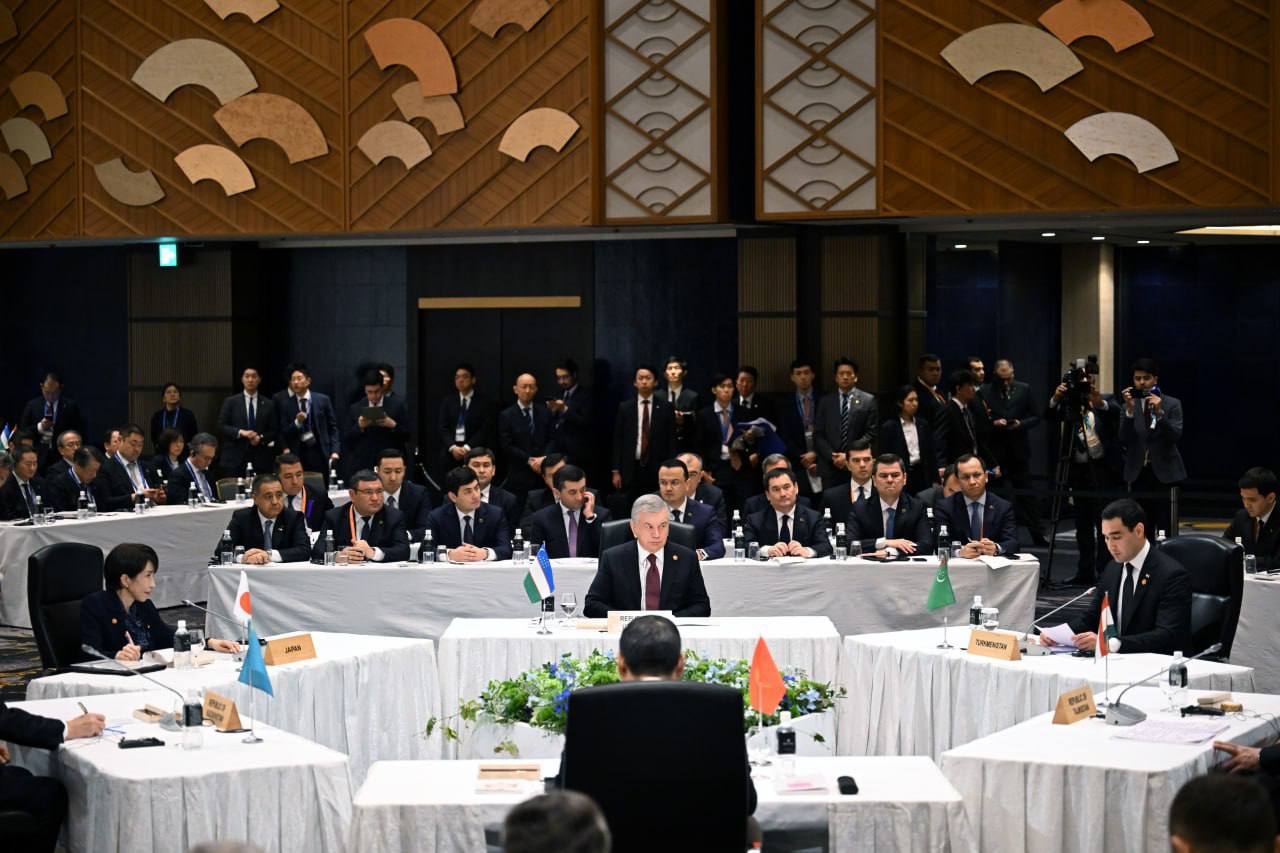
The event, chaired by Japanese Prime Minister Sanae Takaichi, was also attended by President of the Republic of Kazakhstan Kassym-Jomart Tokayev, President of the Kyrgyz Republic Sadyr Japarov, President of the Republic of Tajikistan Emomali Rahmon, and President of Turkmenistan Serdar Berdimuhamedov.
The agenda included consideration of prospects for expanding mutually beneficial cooperation between the Central Asian states and Japan in priority areas such as green economy and sustainable development, strengthening connectivity and regional cooperation, and human resource development.
In his address, the head of state noted that Japan initiated the first “Central Asia Plus” dialogue more than 20 years ago. Deep historical ties dating back to the Silk Road, as well as shared traditions and customs, spiritual, cultural, and family values, provide a solid foundation for developing multifaceted cooperation between Central Asia and Japan.
“We highly appreciate that Japan has been our reliable partner since the Central Asian countries gained independence, making a significant contribution to the region’s socioeconomic development, modernizing its infrastructure, industrial and energy base, and strengthening its scientific, educational, and human resources potential. Therefore, the Central Asian states are interested in expanding and strengthening Japan’s presence in the region,” stated Shavkat Mirziyoyev.
The region’s rich natural resources, its location at the crossroads of global transport, trade, and energy routes, the dynamic economic growth of the Central Asian countries, and the active processes of rapprochement and integration taking place here create fertile ground for cooperation with Japan.
“I am confident that through joint efforts, we will reach new heights.” As the Japanese proverb goes, “If you join forces, you can move mountains,” the Uzbek leader noted.
Moving on to the summit’s agenda, the President of our country presented his vision for developing cooperation in the “Central Asia + Japan” format.
First and foremost, it was proposed to hold summits at the level of heads of state every two years, which would provide an additional powerful impetus to cooperation. A willingness to host one of the next such meetings in Uzbekistan was expressed.
Japan’s initiative to create a new permanent mechanism in the field of justice and law and to organize the first meeting of justice ministers in Tokyo next year was supported.
The head of state advocated the development of a “Central Asia – Japan 2040” Cooperation Strategy, including specific programs and projects to promote the sustainable development of countries in the region and their deeper integration into global economic processes.
The need for an Expert Forum, with the participation of leading analytical institutions, to generate new ideas and proposals and shape a comprehensive cooperation agenda was noted. It is proposed to hold the first meeting of the Forum next year in Tashkent.
The leader of Uzbekistan welcomed the expansion of support from Japanese financial institutions for trade, economic, and investment projects in Central Asia.
“I am confident that by combining the rich natural and human resources of Central Asia with Japan’s industrial and technological potential, we can achieve synergies,” stated Shavkat Mirziyoyev.
In this regard, it was proposed to establish an Investment Fund for the Development of Infrastructure and Industry in Central Asia, launching a “Quality Infrastructure” Program within it, as well as to create a Central Asian Network of Japanese Technology Parks – a regional platform for industrial cooperation, localization, and technology transfer.
Given the growing importance of digital transformation in ensuring economic growth and sustainability, the head of Uzbekistan advocated for the creation of a “Central Asia – Japan” digital hub – a multilateral platform for cooperation in digital solutions, artificial intelligence, the Internet of Things, cybersecurity, and the innovative economy.
Interest was expressed in attracting Japanese investment, technology, and expert assistance to projects related to the construction of high-speed railways and highways, the digitalization of transport corridors, and the construction of airports and logistics centers.
Within the framework of cooperation in the field of green energy, the importance of implementing joint projects to introduce cogeneration technologies, reduce losses, and capture and utilize carbon dioxide was noted. The establishment of a Regional Center for Training Specialists in Renewable Energy in Tashkent was proposed.
In the environmental sphere, the head of state advocated the launch of a joint program to improve air quality in Central Asia, the adoption of a joint action plan to combat climate change, and the creation of a new format for meetings of heads of environmental protection agencies within the Dialogue.
Given Japan’s extensive experience in seismic safety, it was proposed to implement a joint program to assess and improve seismic resilience in the region and to open a Regional Center for Advanced Studies in Tashkent to train engineers, architects, and rescue services according to Japanese standards and protocols.
To further expand cooperation in the cultural and humanitarian sphere, it was proposed to hold the first “Central Asia + Japan” Education Ministers’ Meeting and a Forum of Rectors of Leading Universities in Uzbekistan next year, as well as to adopt a Regional Network Program for Youth Development aimed at fostering long-term ties between youth communities.
Regarding international policy and regional security, the leader of our country noted that the countries of the region and Japan are united in their desire to see Afghanistan peaceful, stable, and focused on creative development.
Japan’s consistent position, which has remained a leading donor and partner in supporting the Afghan people for many years, was highly commended.
Concluding his address, the President of Uzbekistan expressed support for the decisions on all agenda items.
Other leaders also addressed the summit. The Tokyo Declaration was adopted following the event.
Share


Objects for investments