



The results of reforms and priority tasks in the Syrdarya region were discussed
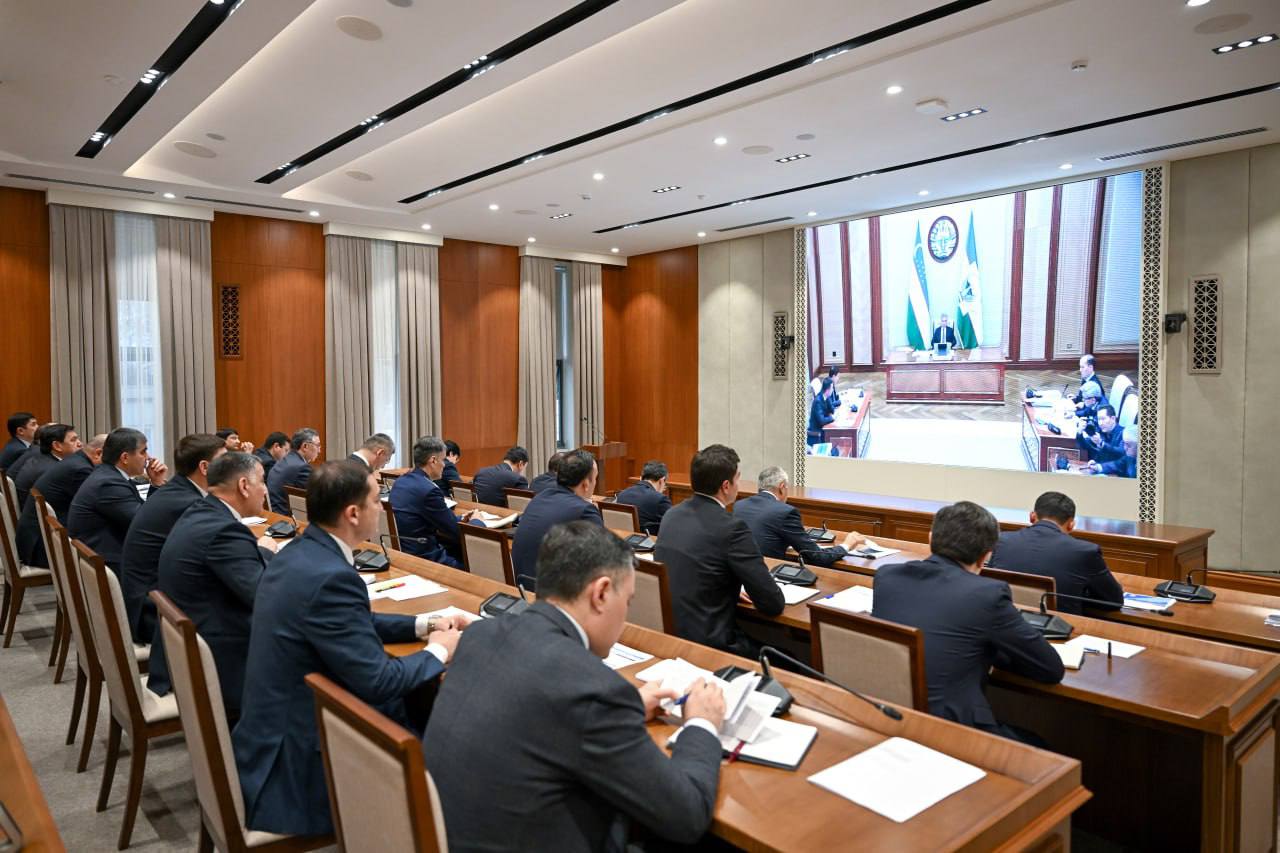
President Shavkat Mirziyoyev held a meeting to discuss the effectiveness of ongoing reforms and future priorities in the Syrdarya Region, the press service of the head of our state reports.
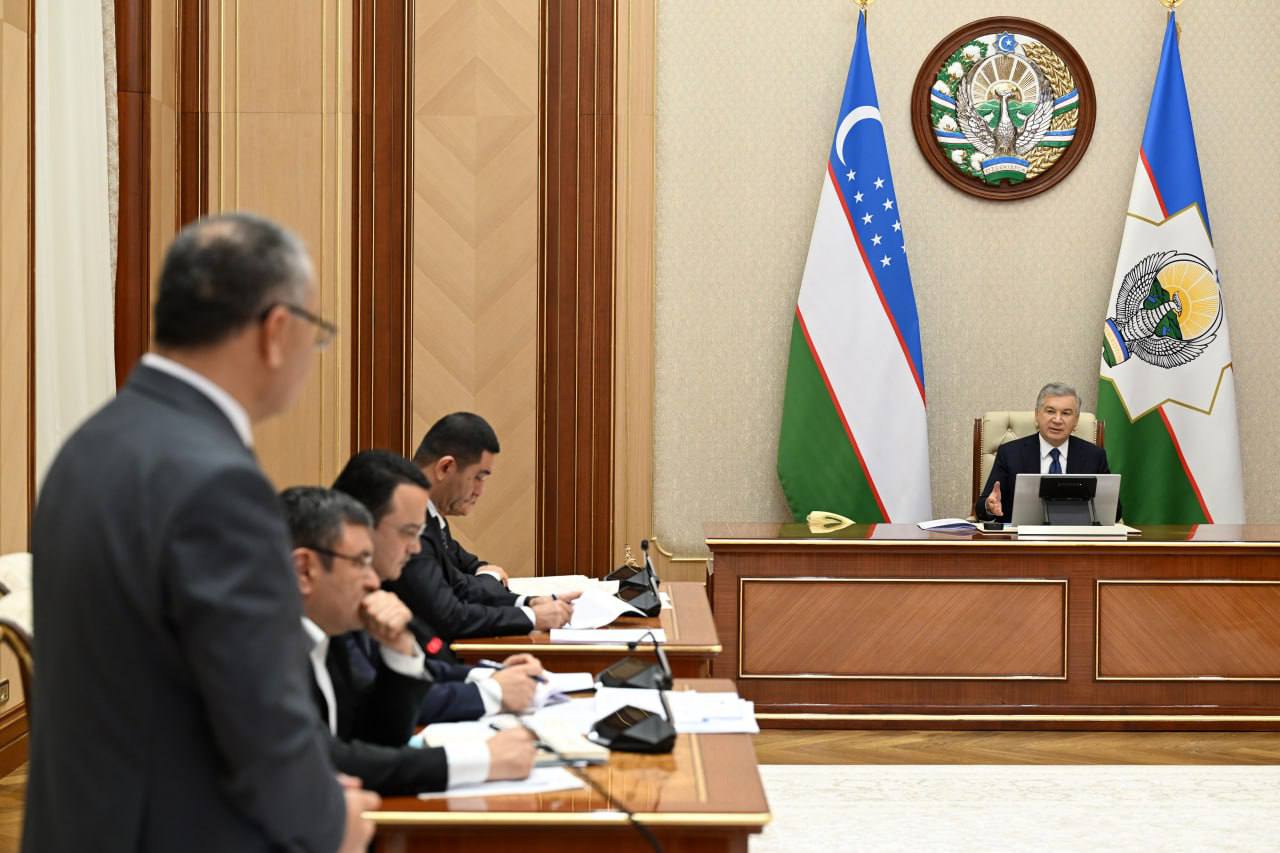
It was noted that significant structural changes have occurred in the region’s economy as a result of reforms undertaken in recent years. Previously reliant on agriculture, the region has rapidly developed its industrial and service sectors, the business environment has improved, and a class of advanced entrepreneurs has emerged.
Last year, the Syrdarya Region’s economy grew by 9.8 percent. The region ranked fourth among regions in industrial production growth, increasing by 8.2 percent. Gross regional product per capita has also been steadily growing: from 10 million soums in 2017, it reached 38.1 million soums by 2025, an increase of almost 3.8 times.
Last year, 42 major investment projects worth over $333 million were implemented in the region. More than 17,500 new jobs were created as part of these projects.
Special attention was paid to efforts to transform the Syrdarya region into a region of advanced innovation based on Chinese experience. Direct cooperation with Chinese provinces was established.
During trips to the Republic of Korea, Japan, and Malaysia, negotiations were also held with a number of investors, and projects worth hundreds of millions of dollars were developed. In particular, an agreement was reached on projects to establish a $300 million livestock complex and a baby food production facility in the Gulistan district. A food production project is planned for the city of Yangiyer in collaboration with the French company Bonduelle.
At the same time, new investment initiatives are being developed in the digital economy, cosmetics industry, agricultural sector, and processing industries. Specifically, projects have been developed to create a data processing center in the city of Shirin and acceleration and incubation centers in the city of Gulistan.
The meeting set the goal of attracting $3 billion in investment to the region this year and increasing exports to $500 million. This will increase the gross regional product by 9 percent, industry by 8.2 percent, services by 15.4 percent, agriculture by 6.8 percent, and construction by 15 percent.
Particular attention was also paid to employment and poverty reduction. Last year, the poverty rate decreased from 11.3 percent to 6.2 percent. However, this figure is still above the national average.
This year, 10 trillion soums will be allocated to support entrepreneurial projects. These funds are planned to provide employment to 185,000 people and reduce unemployment and poverty to 4.6 and 3 percent, respectively. Measures will be taken to transform the cities of Gulistan, Shirin, Yangiyer, and the Sardoba, Saykhunabad, Syrdarya, and Khavast districts into areas free of unemployment and poverty. To achieve this, the meeting emphasized the need to continue supporting entrepreneurship, creating new jobs, and generating income for residents in mahallas through programs such as “Hardworking Woman,” “Equal Opportunities – Inclusive Employment,” and “One Mahalla – One Product.”
Social infrastructure development was also discussed. Using the allocated $100 million, it was commissioned to renovate 47 schools, 45 kindergartens, 35 medical facilities, and 18 sports and cultural facilities in the region.
Last year, the issue of uninterrupted water supply for 22,000 households in Gulistan was resolved. A constant supply of drinking water was received by 12,000 households in the Mirzaabad, Sardoba, Bayavut, and Khavast districts and the city of Yangiyer.
As part of the development of utility infrastructure, this year it is planned to build 349 kilometers of power lines, install 99 transformers, and, by expanding the water supply network, increase the drinking water supply to 89.5 percent.
Furthermore, housing construction is actively continuing in the region. By 2026, 80 apartment buildings with 3,500 apartments are planned for construction, including 1,500 apartments in the “New Uzbekistan” residential complexes, as well as new buildings as part of the renovation program.
The need to effectively utilize agricultural opportunities was particularly emphasized. Syrdarya boasts significantly higher per capita arable land than some other regions, as well as an excellent water supply. However, it was noted that fruit and vegetable exports currently do not exceed $60 million.
In this regard, it is planned to establish the company “Syrdaryo Agro Invest” and, using water-saving and advanced agricultural technologies, develop profitable arable land in the Khavast district, and then offer it to the population as a ready-made business. Initially, this mechanism is planned to be implemented on 12,000 hectares of land.
Targets were set to improve water supply on 20,800 hectares of land and save 748 million cubic meters of water.
The meeting also discussed the implementation of a pilot “Smart Village” project in several mahallas in the Khavast district, based on the Hungarian experience. This project will provide the public with information through an open digital system on the transparency of funds allocated to mahallas, safety, environmental conditions, support for families in need, and entrepreneurial opportunities.
At the end of the meeting, the officials were given a number of specific instructions. Specifically, the objectives were set for the placement of investment projects in the Sirdaryo Free Economic Zone in the city of Gulistan that would create at least 5,000 jobs, the launch of a $100 million solar panel production project, and the modernization of transformers at the Feruz substation.
Furthermore, the President set the following objectives: developing a feasibility study for the construction of the Sultanhovuz Reservoir in the Bayavut District, raising funds from international financial institutions for road repairs in the region, creating an agricultural complex for storing and processing pomegranates in the Mirzaabad District, and opening modern seedling growing centers.
Paying special attention to training young people in modern professions and foreign languages, the President emphasized the need to establish qualification assessment centers in accordance with international standards and train at least 2,000 young people.
The head of state noted that every project implemented in the region should have a practical impact on the income and standard of living of the population and gave corresponding instructions for the timely and high-quality implementation of these tasks.
Share


Objects for investments