



Plans for the development of the coal industry and the introduction of market mechanisms were considered
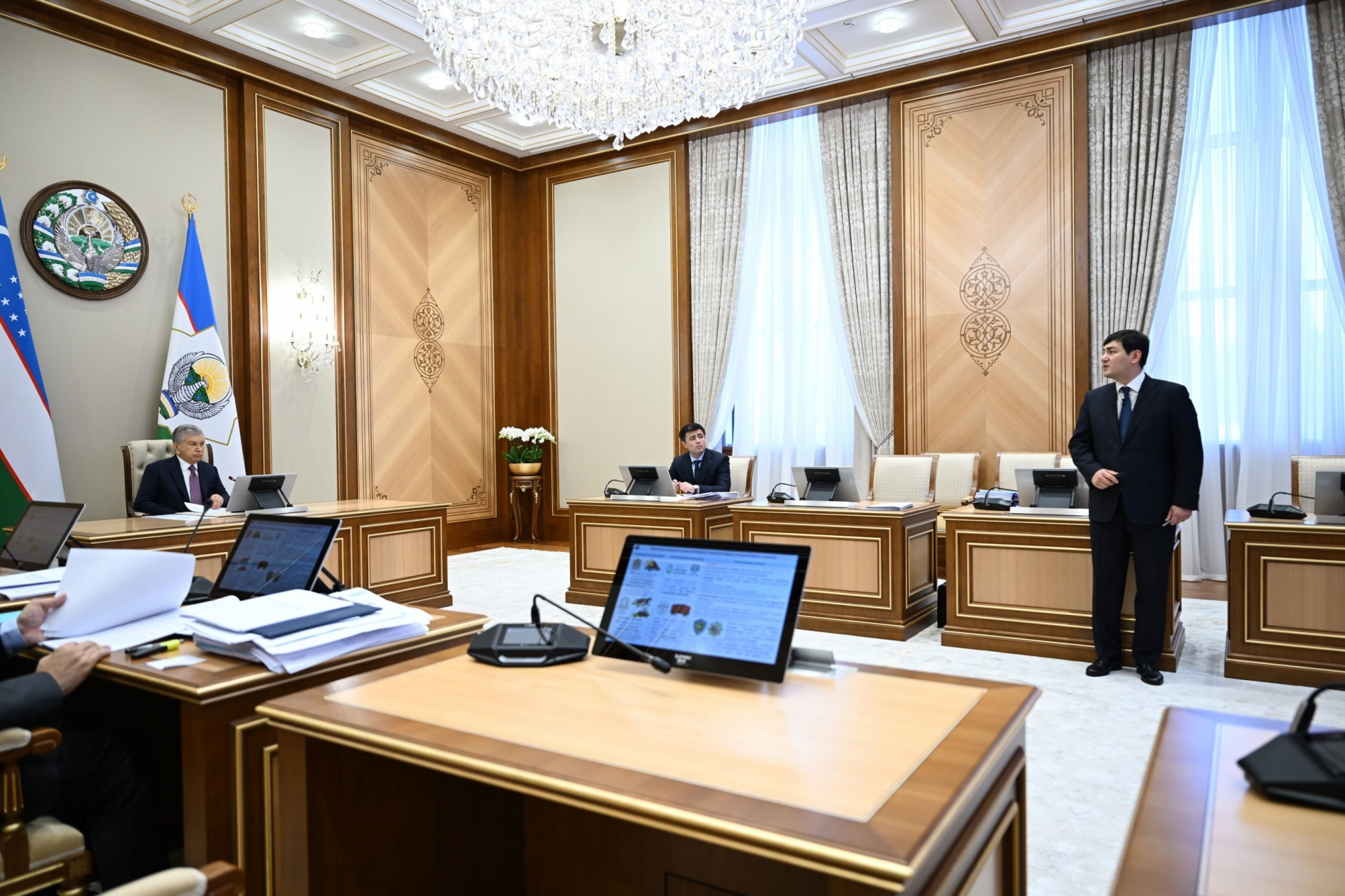
President Shavkat Mirziyoyev reviewed a presentation on the implementation of market mechanisms, increasing production volumes, and implementing new investment projects in the coal industry, the press service of the head of our state reports.
Coal is considered a vital resource for meeting the energy needs of economic sectors, thermal power plants, social institutions, and the population. Therefore, ensuring stable supplies, product quality, price transparency, a competitive environment, and compliance with environmental requirements in the industry are of utmost importance.
While coal production increased on average from 3.1 million to 4 million tons during the first 25 years of independence, over the past nine years, this figure has reached 10 million tons. In the upcoming autumn-winter season, coal production is planned to increase to 11 million tons.
Currently, the number of private entrepreneurs engaged in coal mining has reached 18. In 2023-2025, they expanded geological exploration and mined 2.4 million tons of coal. $117.2 million in private investment has been allocated to these projects. Using a blend of Angren and Shargun coal, thermal power plants were supplied with 1.5 million tons of import-substituting, locally produced, highly flammable coal.
The presentation addressed the transition to market-based pricing for coal.
It was noted that current administrative price regulation impacts producers’ financial stability, their ability to attract new investment, and their ability to increase production volumes.
In this regard, it is proposed to abolish the practice of state-setting coal prices, effective June 1, 2026, and to exclude coal from the list of strategic, socially significant commodities whose prices are regulated by the state. Thus, coal prices will be determined based on supply and demand, and sales to consumers will be conducted through exchange trading.
This approach will contribute to the creation of an open competitive environment in the industry, ensuring a level playing field for all participants, and incentivizing producers to increase production volumes and improve product quality. Thermal power plants and large consumers will be able to purchase coal through a “request for proposals” procedure at average exchange prices for the relevant reporting period.
To ensure stable coal supplies to households and public institutions, a separate mechanism will be introduced. Coal producers will sell their products through exchange auctions to entrepreneurial suppliers via a dedicated trading platform. Entrepreneurs will be selected through an electronic system based on criteria such as the availability of warehouse space, equipment, and tax rating.
To eliminate the price gap in coal supplies to households and public institutions across the republic, rail transportation will be carried out at a uniform rate. The operations of Kumir Taminot Limited Liability Company will be terminated, and 96 coal storage facilities and equipment in the regions will be sold through auctions.
Special attention will be paid to supporting socially vulnerable groups. From June to December, families included in the Social Registry and who purchased coal through the www.mycoal.uz system will receive a one-time financial assistance of up to 600,000 soums. This measure is aimed at providing targeted support to families in need during the transition to market mechanisms.
New quality and environmental safety requirements for imported coal will also be established. Requirements for sulfur content, calorific value, and other parameters of coal imported into the country will be developed. The use and sale of imported coal that does not meet the established requirements will be prohibited in the country. From now on, coal imports will be carried out exclusively by rail.
The presentation also included a report on an investment project to develop the Nishbosh coal deposit. The deposit has total reserves of 233 million tons, and a design annual production capacity of 10 million tons. The $494 million project will create 880 new jobs.
Furthermore, a proposal has been made to build a new thermal power plant with a total capacity of 1.4 gigawatts at the site. The project calls for $1.3 billion in investment and the construction of four 350-megawatt power units using ultra-supercritical technologies.
During construction, 1,500 jobs will be created, and after commissioning, 310 permanent jobs will be created. The plant is expected to generate an average of 9.8 billion kilowatt-hours of electricity per year and save 2 billion cubic meters of natural gas.
The presentation also addressed issues of localization and the development of industrial cooperation in the mining industry.
The importance of increasing the share of local production in projects involving foreign investment, consolidating the needs of large industrial plants and industry enterprises, and supporting local producers through long-term contracts was noted.
In this regard, the development of a localization strategy in the mining industry for 2027-2030 was instructed.
The head of state approved the proposals submitted and issued relevant instructions to the responsible officials.
Share


Objects for investments