



The progress of major investment projects in the transport sector was reviewed
President Shavkat Mirziyoyev reviewed a presentation on transport infrastructure development, the press service of the head of our state reports.
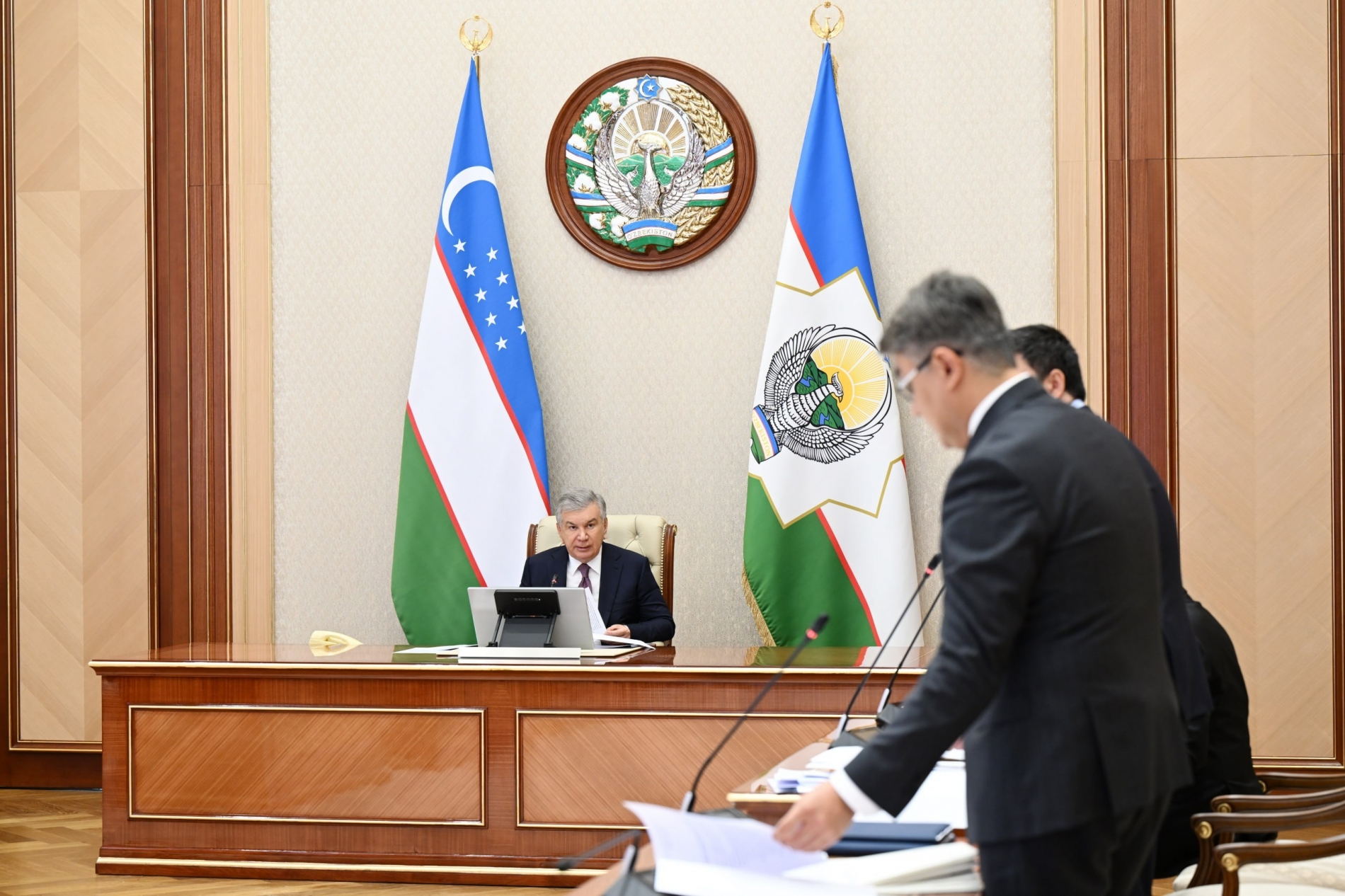
Transport infrastructure plays a vital role in ensuring connectivity across economic sectors, fully tapping into regional potential, and reducing travel distances for residents and businesses. Therefore, our country places particular emphasis on the development of highways, aviation, logistics, and international transport corridors.
The presentation began with a discussion of the construction project for the alternative Tashkent-Samarkand highway. This 282-kilometer-long road will connect the Tashkent, Syrdarya, Jizzakh, and Samarkand regions. The road will be designated a Category I-a highway and will have a concrete pavement with three lanes in each direction. The design speed is 150 kilometers per hour.
The project includes the construction of 12 interchanges, 60 tunnels, 91 bridges, 16 overpasses, 258 drainage structures, and the implementation of an intelligent transportation system. In addition, plans call for the construction of 12 terminals, roadside infrastructure facilities, and a weigh-in system.
Instructions have been given to expedite negotiations with potential investors and begin construction as soon as possible.
Large-scale work is underway in Uzbekistan to create a new civil aviation ecosystem.
Specifically, seven international airports in the regions are being reconstructed to meet modern requirements. New airports have been built in Muynak, Kokand, Zaamin, Shakhrisabz, and the Sariosi and Sokh districts, bringing the total number to 18.
Furthermore, work is underway to organize the operations of Navoi International Airport based on project management principles and to increase its commercial independence. The airport has been granted the right to independently negotiate and enter into contracts with local and international airlines for passenger and cargo transportation, transit flights, and technical stops.
By 2030, the number of flights is planned to increase by 2.3 times, reaching 7,000 per year. Passenger traffic through the airport will also reach 150,000 people, and cargo traffic will reach 45,000 tons per year. A free economic zone, a “free port,” will also be established on the airport grounds, specializing in the provision of technical and commercial services for aircraft.
During the presentation, the construction project for the new New Tashkent International Airport was discussed.
The airport will be designed to handle 20 million passengers per year. The passenger terminal will cover 208,400 square meters, and will include 169 aircraft parking bays and two 4-kilometer-long runways.
The project’s environmental and social impact assessment has been completed in accordance with the requirements of international financial institutions. Work has begun in the project area to relocate canals, sewers, and electrical networks. Negotiations are currently underway with design and contractor organizations.
The issue of providing civil aviation enterprises with aviation fuel was also discussed.
The total capacity of airport fueling facilities is 49,000 tons. By 2030, it is planned to increase aviation fuel production to 600,000 tons per year, and storage capacity to 80,000 tons. To achieve these goals, new storage facilities will be built at the international airports of Navoi, Andijan, Bukhara, Urgench, and New Tashkent.
The need for a phased transition of fuel storage and refueling processes to international standards was noted. Tasks were set for the complete digitalization of fueling facility management processes this year and the establishment of systemic state oversight of compliance with technological requirements in the operation of airport fueling facilities.
The head of state emphasized that the main criteria for developing transport infrastructure should be the cost-effectiveness of projects, construction quality, safety requirements, and public convenience, and issued corresponding instructions.
Share


Objects for investments