


Measures to implement agreements with Oman, Jordan, and Turkey were reviewed
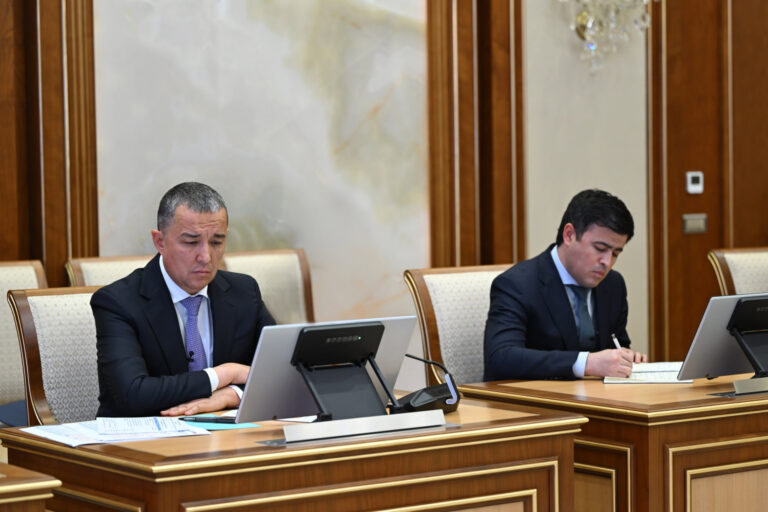
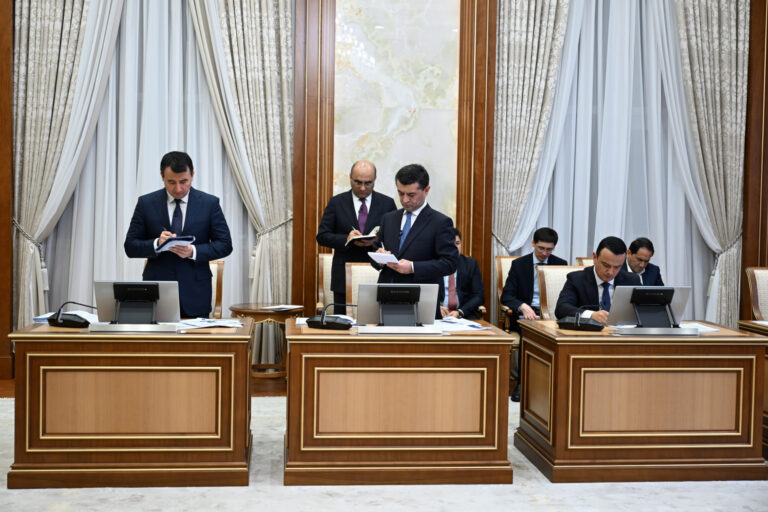
President Shavkat Mirziyoyev held a meeting to discuss the implementation of agreements reached during recent foreign visits, as well as preparations for hosting major international events in Uzbekistan in 2027, the press service of the head of our state reports.


State visits to the Sultanate of Oman (November 16–17) and the Hashemite Kingdom of Jordan (November 23–24) have marked a new phase in the development of Uzbekistan’s relations with these nations. High-level talks resulted in the signing of strategic partnership agreements and the establishment of a broad, long-term agenda for practical cooperation.
During the state visit to Oman, more than 30 bilateral documents were signed, and a portfolio of joint projects worth $5 billion was established. A target has been set to increase the volume of mutual trade to $1 billion.
Promising areas for cooperation were identified, including energy, electrical engineering, the chemical and mining industries, urban development, agriculture, finance, and digital technologies.
During the state visit to Jordan, 19 bilateral documents were signed. Among the most significant is a preferential trade agreement, which is intended to help boost mutual trade turnover to $500 million.
Joint projects were outlined, covering the establishment of textile manufacturing, the development of critical mineral resources, the localization of pharmaceutical production, the manufacturing of mineral fertilizers, and the creation of agro-industrial clusters.
The meeting also included a detailed review of the progress made in implementing agreements reached with Turkey. Following the official visit of our head of state to Ankara this January and the fourth meeting of the High-Level Strategic Cooperation Council, priorities have been established for further deepening the comprehensive strategic partnership. Objectives have been set to increase bilateral trade turnover to $5 billion, expand industrial cooperation, and invigorate interregional ties.
An important step toward implementing these agreements was the establishment of the Uzbekistan-Turkey High-Level Business Support Council, following talks between the leaders of the two countries in Ankara this October.
During the first meeting of the Council, held on November 19 in Tashkent and attended by representatives from over 150 Turkish companies, investment and trade agreements totaling $11.2 billion were reached.
Additional opportunities for expanding cooperation exist in sectors such as poultry farming and horticulture, healthcare, pharmaceuticals, urban development, geology, and tourism.
The meeting defined priority tasks for ensuring the execution of signed documents, accelerating the development of investment projects, identifying funding sources, and establishing the necessary infrastructure.
Emphasis was placed on the need to develop comprehensive “roadmaps” for each country, outlining specific measures, implementation timelines, and the parties responsible for execution.
The importance of the practical implementation of agreements in the fields of tourism, education, science, and culture—as well as the development of direct air links and interregional cooperation—was also noted.
Heads of ministries, industrial sectors, and regions have been instructed to maintain ongoing engagement with foreign partners, provide systematic support for joint projects, and promptly address any issues that may arise.
The meeting also reviewed the progress in implementing agreements reached during other foreign visits and high-level talks that have taken place since the beginning of the year. In addition, preparations for major international events scheduled for 2027 were discussed. Particular attention was paid to shaping the substantive agenda for these events, as well as developing initiatives and proposals aimed at further fostering multilateral cooperation.
Relevant government agencies have been tasked with ensuring well-coordinated efforts across all aspects of substantive and organizational preparation, conducting necessary consultations with international partners, and establishing the conditions required to host these upcoming events at a high standard.
The meeting also addressed priority objectives for the continued development of the electrical engineering industry.
By 2030, the goal is to increase the industry’s production volume to 130 trillion soums and export value to 5 billion dollars, while building a portfolio of investment projects worth over 11 billion dollars. Between 2027 and 2029, 164 projects are set to be implemented across six promising areas.
Emphasis was placed on the widespread adoption of modern technologies, the expansion of domestic raw material processing, increased localization, the strengthening of national manufacturers’ positions within global supply chains, and the promotion of domestic brands in foreign markets.
A key component of the industry’s future development will be the training of highly qualified personnel, including through the “One Thousand Design Engineers” program.
Share


Objects for investments