



Priority tasks for the development of the Kashkadarya region were discussed
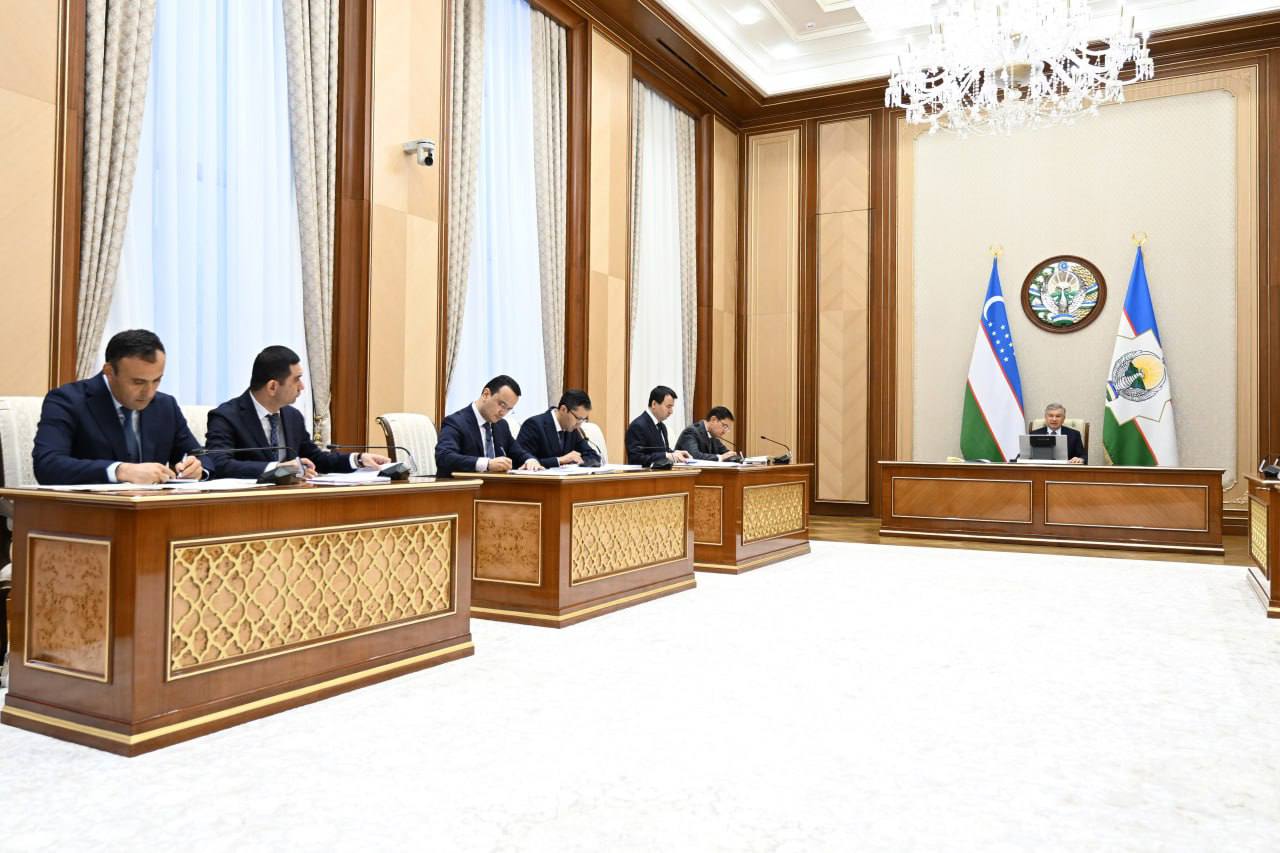
President Shavkat Mirziyoyev held a meeting to discuss the effectiveness of ongoing reforms and future priorities in the Kashkadarya region, the press service of the head of our state reports.

It was emphasized that Kashkadarya possesses enormous potential thanks to its vast territory, abundant natural resources, developed industry, and hardworking and enterprising residents.
Last year, the gross regional product grew by 6.8 percent, industry by 7.2 percent, services by 13.6 percent, and agriculture by 4.3 percent. From 2017 to 2025, the gross regional product per capita increased 3.2-fold to 26.9 million soums. Unemployment and poverty rates decreased to 4.9 percent and 6.5 percent, respectively.
It was noted that by implementing new projects in various economic sectors, industrial growth is expected to reach 8.6 percent in 2026, attracting $3.5 billion in investment, and exporting $727 million in products. As a result, the regional economy is expected to grow by 8.2 percent, the service sector by 15.9 percent, construction by 13.2 percent, and agriculture by 5.8 percent.
The need to ensure high industrial growth rates by launching 195 projects worth $1.7 billion, expanding production capacity, and creating industrial microcenters was emphasized.
Plans for the implementation of a number of major industrial projects in the region were reported. Specifically, plans are underway to establish production facilities for fabrics, clothing, and hygiene products, agricultural machinery and equipment, electric vehicle charging stations, fiber cement panels, and wall tiles.
The creation of the Mubarek Special Innovative Industrial Zone and the Karshi Green Technologies Industrial Zone is also planned, with 36 projects worth over $1.1 billion planned for implementation in 2026-2027, creating approximately 6,000 new jobs.
The need for further poverty reduction through deep and medium specialization of mahallas based on new approaches, and the provision of preferential loans and subsidies is emphasized. Specifically, through the provision of 820 billion soums in loans, 52.3 billion soums in subsidies, and support for the self-employed, 48,000 entrepreneurial entities will be created and 31,000 microprojects will be implemented in mahallas.
As a result, by the end of 2026, the unemployment rate is expected to be reduced to 3.2 percent and the poverty rate to 3 percent, thereby transforming the Guzar, Kamashinsky, Kukdala, Mirishkor, Shakhrisabz, and Yakkabag districts into areas free of poverty and unemployment.
It was noted that, in the current context of rising global meat prices, the region is implementing a new system for developing livestock farming and strengthening the forage base, as well as the efficient use of pasture lands.
To this end, targets have been set to increase the production of forage crops, potatoes, vegetables, legumes, and oilseeds by developing 200,000 hectares of land by 2030, including 15,000 hectares by 2026, as well as creating the necessary infrastructure.
This year, grain yields are planned to increase to 84.8 centners, cotton to 47.5 centners, and potatoes to 175 centners. It is stated that through the acquisition of 48 grain harvesters and 272 seeders, and the implementation of water-saving technologies and modern agricultural practices, agricultural revenues can be increased by 20-35 percent.
It is noted that water supply is a pressing issue for Kashkadarya.
Considering that a significant portion of agricultural crops in the region are irrigated using pumps, targets have been set for 2026 to concrete 320 kilometers of main and 3,300 kilometers of internal canals, implement water-saving technologies on 70,600 hectares, conduct laser leveling on 27,400 hectares, and modernize 16 pumping stations. This is expected to save up to 800 million cubic meters of water.
A project to supply water from the Gissarak Reservoir to the city of Karshi to improve drinking water supplies was developed. This project will include the construction of 16 drinking water supply facilities and 416 kilometers of water supply network. Sewage networks will be reconstructed in the cities of Karshi and Shakhrisabz, as well as in the Dehkanabad and Kamashinsky districts.
It was emphasized that to fully utilize the city’s tourism potential, building on the experience of Miraki, which attracts 1 million tourists annually, these new projects need to be expanded to other districts.
These include projects to create the Maidanak high-mountain tourist center in the Kamashinsky district and the Gelon international all-season resort, designed for 13,000 tourists, in the Shakhrisabz district; tourism development in the village of Tatar in the Yakkabag district; and the organization of trekking routes and a tent camp in the Hazrat Sultan Peak area.
Overall, 45 hotels and guesthouses are planned to open this year, creating 1,130 additional accommodations.
Programs to improve road, housing, and utility infrastructure in the region were also discussed.
It is planned to allocate 864 billion soums to improve internal roads, water supply, irrigation infrastructure, and electrical networks in two districts and 46 mahallas “in the image of New Uzbekistan,” as well as in three districts and 108 mahallas with difficult conditions.
In the social sphere, measures have been identified to support families and women, as well as develop the healthcare system. Specifically, measures are envisaged to create new public and private kindergartens and schools, provide employment to 120,000 women, train 21,000 of them in vocational and entrepreneurial skills, and provide assistance to 102,000 women through the “Women’s Notebook” program.
New initiatives to organize orderly labor migration and vocational training in cooperation with Germany were presented. It is planned to send 3,000 young people to work in Germany in 2026 and 5,000 in 2027, and to open an Education and Technology Center in Karshi to train them.
Following the meeting, the head of state gave specific instructions to the responsible officials on establishing strict oversight of the implementation of assigned tasks, ensuring investment and export indicators, creating new jobs, and improving the standard of living.
Share


Objects for investments