



The effectiveness of reforms and priority tasks in the Tashkent region were discussed
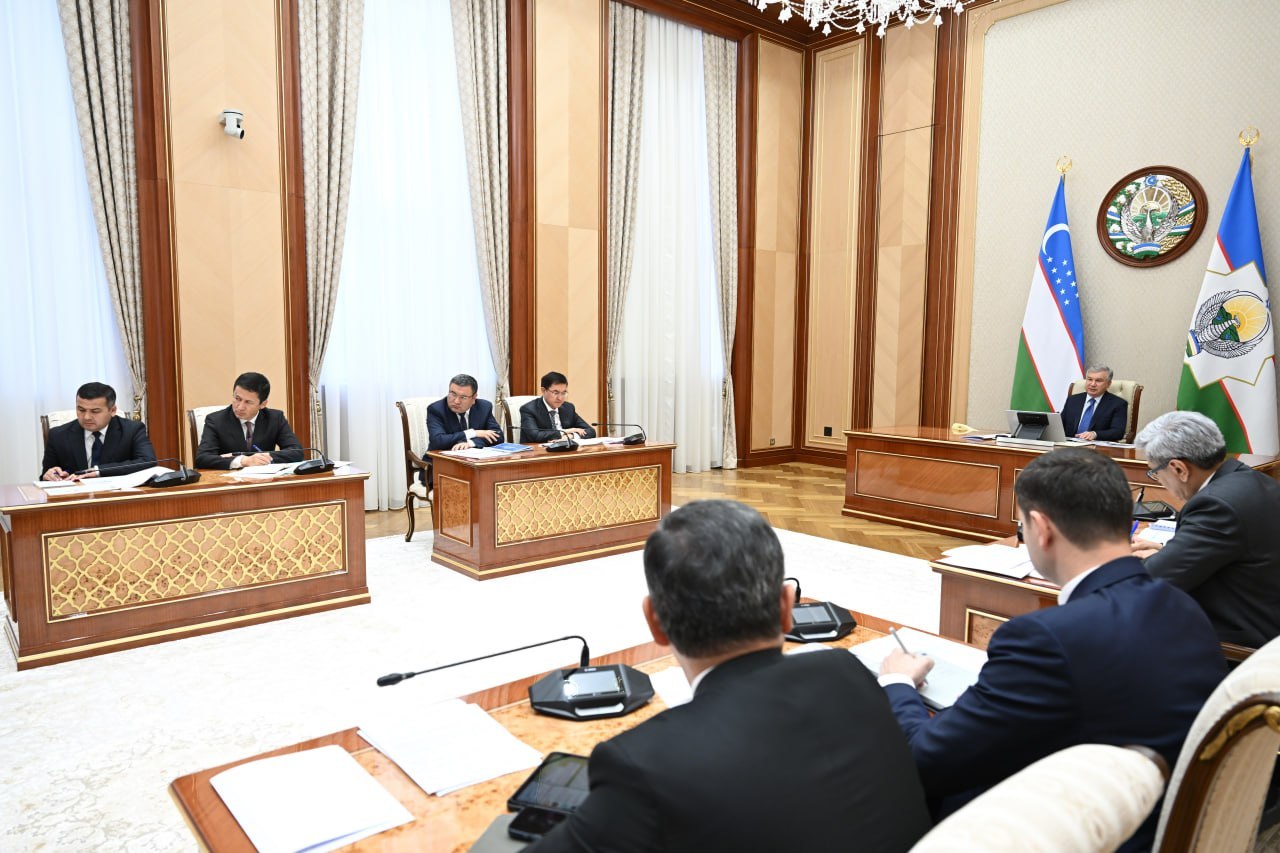
On April 8, President Shavkat Mirziyoyev held a meeting dedicated to the effectiveness of ongoing reforms in the Tashkent region and future priorities, according to the presidential press service, the press service of the head of our state reports.

The head of state noted that the Tashkent region’s proximity to the capital creates appropriate expectations among residents – employment levels, incomes, and quality of life should be comparable to those in Tashkent. In this regard, he emphasized that the region should serve as a model for improving the entrepreneurial and business environment, developing industry, services, and agriculture.
In recent years, extensive work has been carried out in the region. Specifically, 23 resolutions on regional development were adopted in 2024–2025, allocating significant resources in the form of budget funds, bank loans, and foreign investment. During this period, 14 new industrial zones were established, 115 investment projects were implemented, 237 new exporters emerged, and over 300,000 new jobs were created.
Over the past year, major projects in the electrical engineering, metallurgy, pharmaceutical, textile, mechanical engineering, and mining industries have been launched in Parkent, Akhangaran, and Almalyk. Work has begun to relocate 87 enterprises that negatively impact the capital’s environment to the Tashkent region. To date, more than 15 textile enterprises have relocated, and 4,700 residents have found employment in their new locations.
Overall, in 2025, the region’s gross regional product grew by 7.1 percent, industrial production by 6.6 percent, agriculture by 4.2 percent, services by 15.2 percent, and construction by 9.8 percent.
In 2026, the region’s economy is projected to grow by 9.1 percent, industry by 8.8 percent, services by 17.2 percent, construction by 15 percent, and agriculture by 6.6 percent. To achieve this, it is planned to attract $6.2 billion in investment and ensure exports of $2.8 billion.
It was noted that from now on, district potential will be analyzed using artificial intelligence to identify new opportunities in industry, investment, and exports. To further enhance the effectiveness of this work, a proposal to open a Center for Artificial Intelligence and Digital Development in the region was supported.
A new industrial management system is being implemented in the region. The performance evaluation criteria for the deputy khokim for industry will include specific performance indicators for increasing investment and exports, as well as increasing the share of finished and semi-finished goods.
The goal has been set to transform 883 mahallas into areas free from poverty and unemployment, provide permanent employment to 84,700 residents, legalize 37,000 informal jobs, and train 13,300 unemployed citizens by this year.
A number of new projects have been identified as sources of additional industrial growth. Specifically, it was noted that a project to produce ceramic and porcelain tiles is being implemented in Angren, and textile and knitwear in Nurafshan. A project to create the Tinchlik small industrial zone is underway in the Yangiyul district, the Parkent Pharma free economic zone in the Parkent district, a furniture cluster, a mushroom farm, and a sweet corn production facility in the Urtachirchik district, and a fish farming complex in Yangiyul.
Agriculture and food security were also discussed separately.
As noted, livestock and poultry production volumes remain insufficient to meet the needs of the capital and the region. Therefore, a separate program to develop livestock farming and expand the feed supply will be implemented in the Akhangaran district. There are plans to establish a research and production center for sheep and goat breeding, as well as import 50,000 head of pedigree small ruminants. In addition, a mechanism will be introduced in Akhangaran to allocate 60,000 hectares of pastureland, not occupied by forests and on the forestry balance sheet, through auction.
Overall, 78 livestock farming projects worth 2.1 trillion soums are planned for implementation in 2026, creating 496 new jobs. Water-saving technologies are also planned for 35,000 hectares, and new lands are to be developed, including orchards and vineyards.
Poultry farming development projects worth $45 million will be implemented in the Akkurgan and Akhangaran districts, enabling the production of 30,000 tons of poultry meat per year. It was noted that the per-hectare yield of onions and garlic is several dozen times higher than that of grain. In this regard, a proposal to gradually replace grain with high-yield crops in Akhangaran was approved.
It was emphasized that the Amirsoy winter resort complex and the Beldersay Resort recreation area in Bostanlyk have quickly become internationally renowned tourist destinations. It was stated that similar projects can now be implemented in the mountainous regions of Parkent, Gazalkent, Akhangaran, and Angren. Specifically, a ski resort will be created at the Oltin Bel peak and in the surrounding area in Parkent, including a hotel, chalet-style houses, recreational facilities, and entertainment. A modern tourist complex will be built in the Blue Mountains recreation area in the Akhangaran district.
Furthermore, there are plans to establish tourist villages in the villages of Lashkarak and Yangiabad in Angren, ecotourism and hunting tourism facilities in the Bekabad district, the Kumushkan tourist complex in the Parkent district, and family recreation areas and guest houses in Parkentsay. The capacity of these accommodations is planned to increase to 35,500 beds.
The goal is to increase the export of tourism services in the region to $600 million, and the number of foreign and domestic tourists to 16.5 million.
The meeting noted that 956 billion soums have been allocated for the implementation of 231 projects in the region’s “difficult” districts, as well as in districts, cities, and mahallas “in the guise of New Uzbekistan.” Instructions were given to expedite the improvement of housing conditions, electricity, water supply, sewerage, and roads in mahallas.
Specifically, 39 mahallas without access to drinking water will be fully provided with a centralized water supply, and 166.7 kilometers of water supply networks will be reconstructed in 81 mahallas. Furthermore, 121 outdated transformers will be upgraded in 145 mahallas, and 443.6 kilometers of power lines will be replaced.
Major social and innovative projects were also discussed at the meeting.
In particular, a plan was discussed for the construction of the international innovative medical city, Tashkent Medical Smart City, costing $5 billion and covering 400 hectares in the Yukorichirchik district. Projects such as the creation of a $35.4 million Future Technologies Center in Nurafshan, involving over 100 foreign IT companies and increasing service exports to $20 million per year, as well as a 670-bed multidisciplinary medical cluster, a social services center, and a regional state archive building, were also discussed.
Furthermore, the status of and future plans for addressing public inquiries, ensuring public safety, developing a green economy, and youth policy were discussed.
At the end of the meeting, the President instructed those responsible, together with the regional reform headquarters, to fully utilize existing potential and, on this basis, achieve concrete results in creating new jobs, increasing incomes, and improving living conditions. It was determined that the most important goal should be to transform the Tashkent region into a territory free of poverty and unemployment, so that it becomes a model for other regions.
Share


Objects for investments