



Issues of improving the project review system were discussed
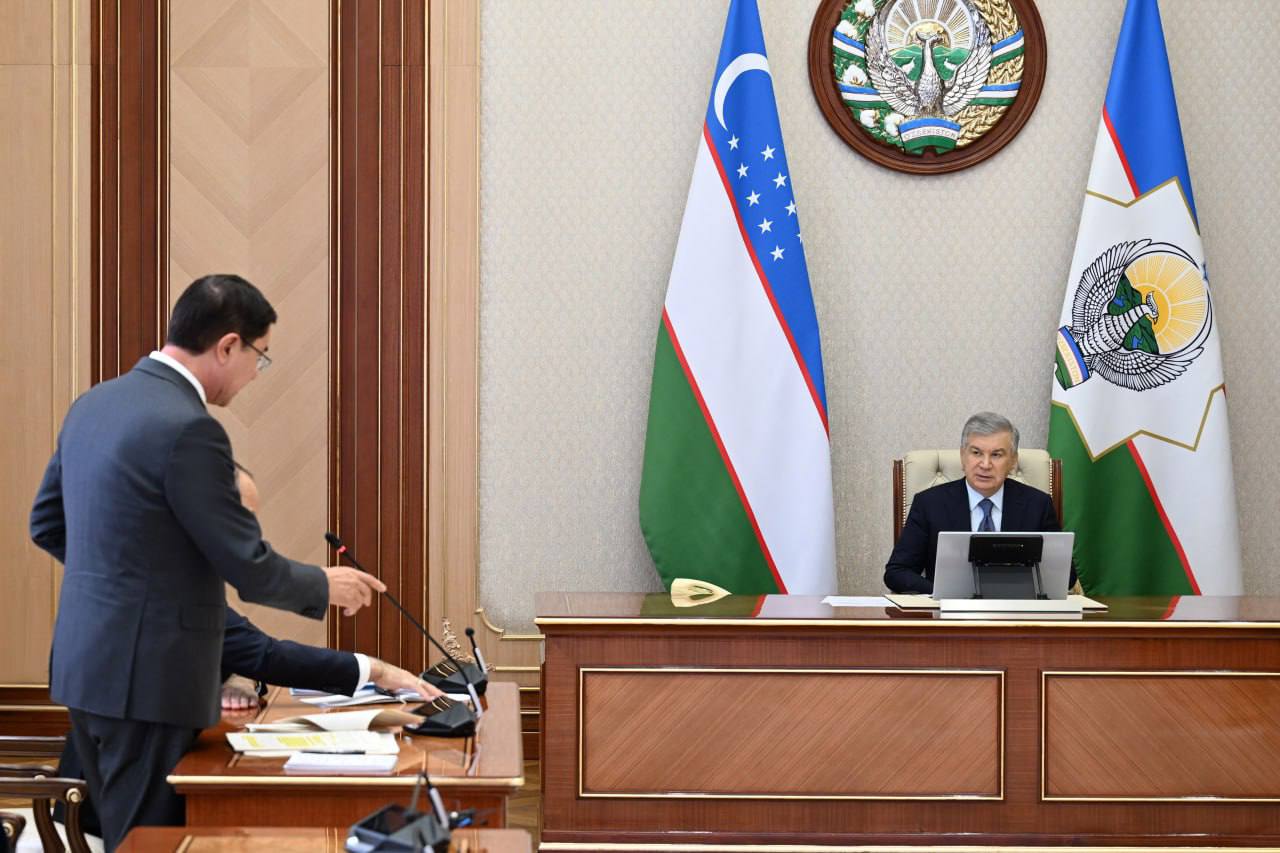
On March 11, President Shavkat Mirziyoyev reviewed a presentation of proposals for improving the project review system, the press service of the head of our state reports.

This year, it is planned to attract over $50 billion in investment to the country’s regions and economic sectors, allocate 24 trillion soums of budget funds for the construction of social and infrastructure facilities, and purchase goods, works, and services worth over 300 trillion soums through public procurement. When implementing such large-scale projects, ensuring the efficient and high-quality review system is crucial.
However, the current procedure does not fully meet modern requirements and has raised justified complaints from entrepreneurs and investors. In particular, last year, a significant portion of the 7,750 documents submitted for review were reviewed with delays. In some cases, projects were returned for revision several times due to minor deficiencies.
Therefore, by presidential decree, the Center for Comprehensive Review of Projects and Import Contracts was transferred to the newly created Agency for Industrial Cooperation and Public Procurement, and tasks for transforming its operations were defined.
The presentation addressed the challenges in the sector and proposed solutions.
Due to the insufficient level of digitalization of the center’s activities and the lack of risk analysis methods, the operational workload of its employees exceeds acceptable standards. Despite the center’s 130 specialists, due to the lack of differentiation between projects by risk level and strategic importance, each employee must review, on average, one project every two days.
The majority of documents submitted for review relate to relatively low-value projects. Furthermore, despite the similarity of many documents to previously reviewed projects, they undergo the full review cycle, resulting in additional time and resource expenditures.
The presentation proposed incorporating best practices and experience into the center’s work.
In particular, it was proposed to introduce a differentiated procedure for reviewing projects based on risk level and cost. Accordingly, technical specifications will not be considered during the review of pre-project documentation. Only corporate and budget projects valued over $15 million will be subject to review.
Initiatives have been put forward to conduct parallel reviews of large and megaprojects, expedite the review of similar projects, and simplify the review of obsolete and outdated equipment, as well as to use benchmarking methods. This will streamline the review process and allow the center to focus on large investment projects of strategic importance.
The presentation also addressed the implementation of incentive mechanisms for participants in the review process. Specifically, incentive measures for clients were proposed, including expedited review procedures and discounts for receiving a positive conclusion at the first stage or for resolving project issues ahead of schedule.
Particular attention was paid to the digitalization of the center’s activities. To this end, a unified information platform will be created, integrated with databases of tax and customs authorities, national statistics, environmental and climate data, as well as with the electronic systems of the national classifier of construction resources and public procurement. The platform is expected to enable the online generation of project documentation and the analysis of prices and technical parameters of goods and services using artificial intelligence technologies.
Emphasizing that project review is an important component of the investment climate, the head of state instructed responsible officials to reduce unnecessary bureaucratic barriers and digitalize processes, improving quality and efficiency in this area.
Share


Objects for investments