



Objectives in the field of tourism and culture were discussed
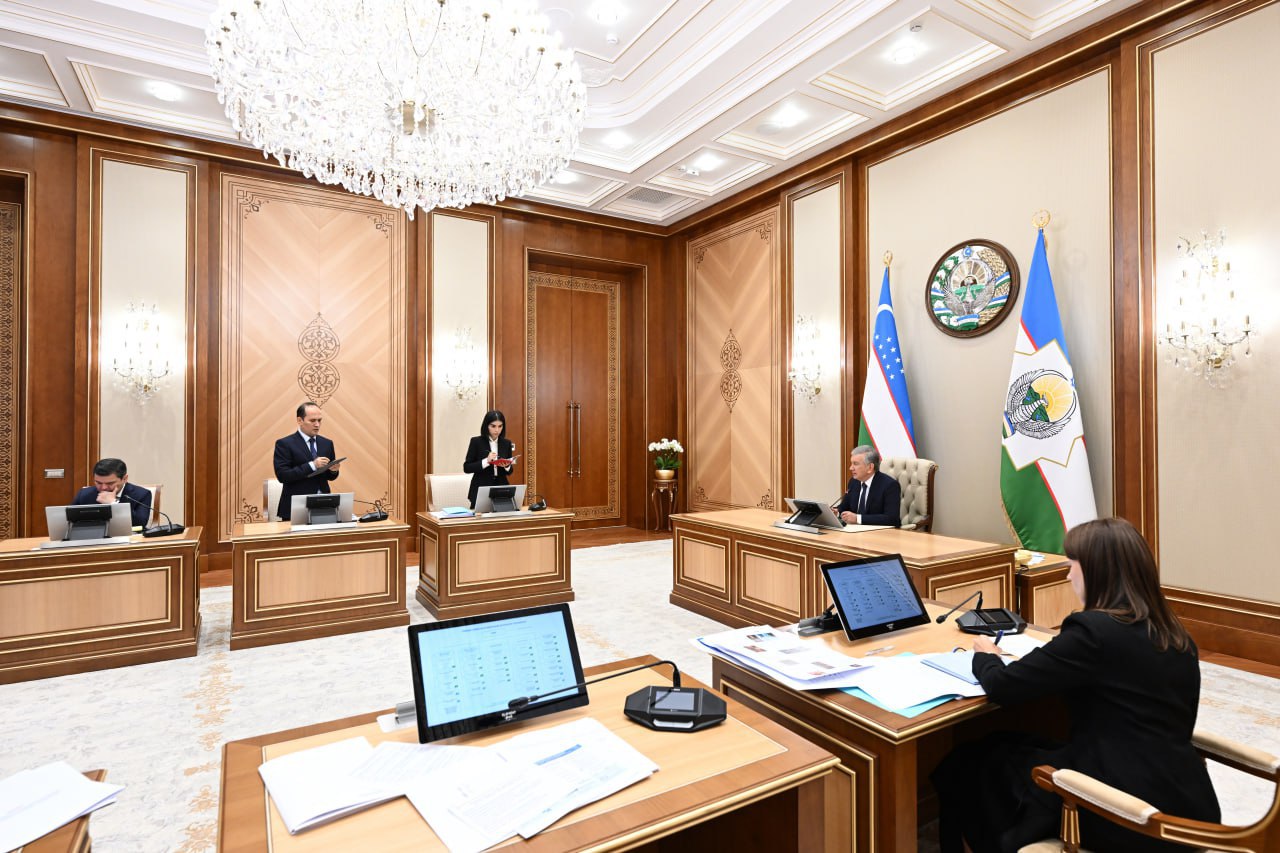
President Shavkat Mirziyoyev reviewed a presentation on the results of international cultural events, future objectives for developing tourism, and the creation of major cultural and tourism facilities, the press service of the head of our state reports.
It was noted that Uzbekistan has been consistently strengthening its position in the international cultural space in recent years. The 43rd session of the UNESCO General Conference was successfully held in Samarkand, attended by over 3,000 delegates from 190 countries. Following its conclusion, a roadmap was developed and approved for the practical implementation of Uzbekistan’s initiatives in the areas of cultural heritage protection, education, and creative industries.
The results of the country’s participation in the World Expo 2025 in Japan were summarized. Uzbekistan’s “Garden of Knowledge” pavilion, covering 1,200 square meters, was visited by approximately 1 million people. The exhibits received extensive international coverage and became one of the most visited pavilions. Preparations have also begun for participation in Expo 2030 in Saudi Arabia, where a 3,600 square meter pavilion is planned. The results of the First Bukhara Biennale of Contemporary Art were celebrated. Over the course of 70 days, 14 restored cultural heritage sites were displayed on a 3.5-hectare site. Seventy artists and curators from more than 40 countries participated in the Biennale. Approximately 1.8 million people attended the event, including over 100 high-ranking foreign guests. It was emphasized that Uzbekistan’s regular participation in the Venice Biennale since 2021 has resulted in an increase in tourist flow from Italy and the expansion of international professional contacts.
The country hosted major international concert programs. Specifically, Jennifer Lopez performed in Tashkent, Andrea Bocelli in Samarkand, and Black Coffee in Khiva. During the events, hotel occupancy rates in the respective cities exceeded 90 percent, positively impacting tourism and service sector revenues.
It was noted that in 2025, the number of tourists exceeded 11 million, tourism exports reached $4.8 billion, and the number of countries with visa-free travel increased to 94.
At the same time, the need for the tourism sector to transition to a project management system, implement a unified mechanism for the creation and development of tourism products, and strengthen the coordination of major events was emphasized.
Particular attention was paid to the digitalization of the industry. The task was set to launch a National Tourism Platform with the integration of public and private information systems, implement proactive digital services for tourists and entrepreneurs, expand cashless payments, and analyze tourist flows. It was noted that digitalization is planned to reduce the share of the shadow economy and increase annual tourism tax revenues.
The need to implement a new marketing strategy to promote the country’s tourism potential in priority markets—the United States, the Persian Gulf countries, India, China, and Scandinavia—was emphasized. Objectives have been set to expand Uzbekistan’s presence on international tourism platforms, develop digital content, and attract major media outlets and opinion leaders.
The presentation discussed projects for major cultural and artistic facilities.
The “Samarkand Heritage Trail” project begins in Samarkand. A single 6.6-kilometer tourist route will connect the Registan ensemble, the Bibi-Khanym and Shah-i-Zinda complexes, and the Mirzo Ulugh Beg Observatory.
The design for the new “Silk Road” museum in Samarkand was presented. It includes the construction of a modern three-story building with a total area of 19,500 square meters, featuring an inclusive environment, exhibition halls, storage facilities, and educational spaces.
The Mirzo Ulugh Beg Observatory is planned to undergo a landscape renovation. A new museum building, immersive exhibition halls, a visitor center, and landscaped pedestrian paths will be created, integrating archaeological objects into a unified museum environment. A master plan for the city of Bukhara was also presented. It calls for the creation of a comfortable urban environment, the development of transport and tourism infrastructure, and the creation of a historical and ethnographic park as a multifunctional complex with a congress hall, an amphitheater, a library, a food hall, retail and commercial facilities, and a high-class hotel.
Following the discussion, the President emphasized the need to strictly align cultural projects with tourism development objectives, ensuring their economic sustainability and high-quality management.
Share


Objects for investments