



Priority tasks for the development of the Fergana Region have been identified
Shavkat Mirziyoyev held a meeting in the city of Fergana on April 28 to discuss the socio-economic development of the Fergana Region, the press service of the head of our state reports.

The Head of State first focused on the changes that have taken place in the region’s economy in recent years.
As a result of $8.2 billion in investments, 8,000 modern production facilities have been commissioned in the region. About 100 trillion soums have been directed toward entrepreneurship development, and commercial space has increased by 10 million square meters. A total of 13,500 small and medium-sized enterprises have been established, nearly doubling their overall number.
As a result, the gross regional product increased by 1.7 times, industrial production by 1.5 times, and the service sector by 3 times. Most importantly, over the past four years, unemployment decreased from 9.2% to 4.6%, and poverty declined from 11.6% to 5.2%.
Significant efforts are underway to improve housing conditions. In place of 241 outdated homes in the Ipakchi and Kirguli mahallas of Margilan, apartment buildings with 2,500 units have been constructed. In the “Yangi Uzbekistan” residential complex under construction in the Navruz mahalla, another 6,500 families will be settled this year. Similar projects are ongoing in the Yaziyavan and Kuva districts, as well as in the cities of Kokand and Fergana.
Over the past ten years, schools with 74,000 places, kindergartens with 145,000 places, and hospitals with 3,000 beds have been opened. Additionally, 167 private schools have been established, educating over 40,000 children. As a result, Fergana Region has risen to 3rd place in the country in terms of university admissions.
In agriculture, 15,000 hectares of industrial orchards and vineyards have been created, and another 6,000 hectares restored. Fruit and vegetable exports have tripled, reaching $400 million.
Tourism is actively developing in the Fergana, Sokh, and Kuva districts, as well as in the cities of Margilan and Kokand. Last year, the number of foreign tourists exceeded 500,000 for the first time, while domestic tourists surpassed 3 million. Tourism service exports reached $185 million.
“The people of Fergana expect even greater results from us,” said President Shavkat Mirziyoyev.
In this regard, the region aims this year to achieve 9.1% economic growth, 9% industrial growth, attract $4.5 billion in foreign investment, and double exports to $2 billion.
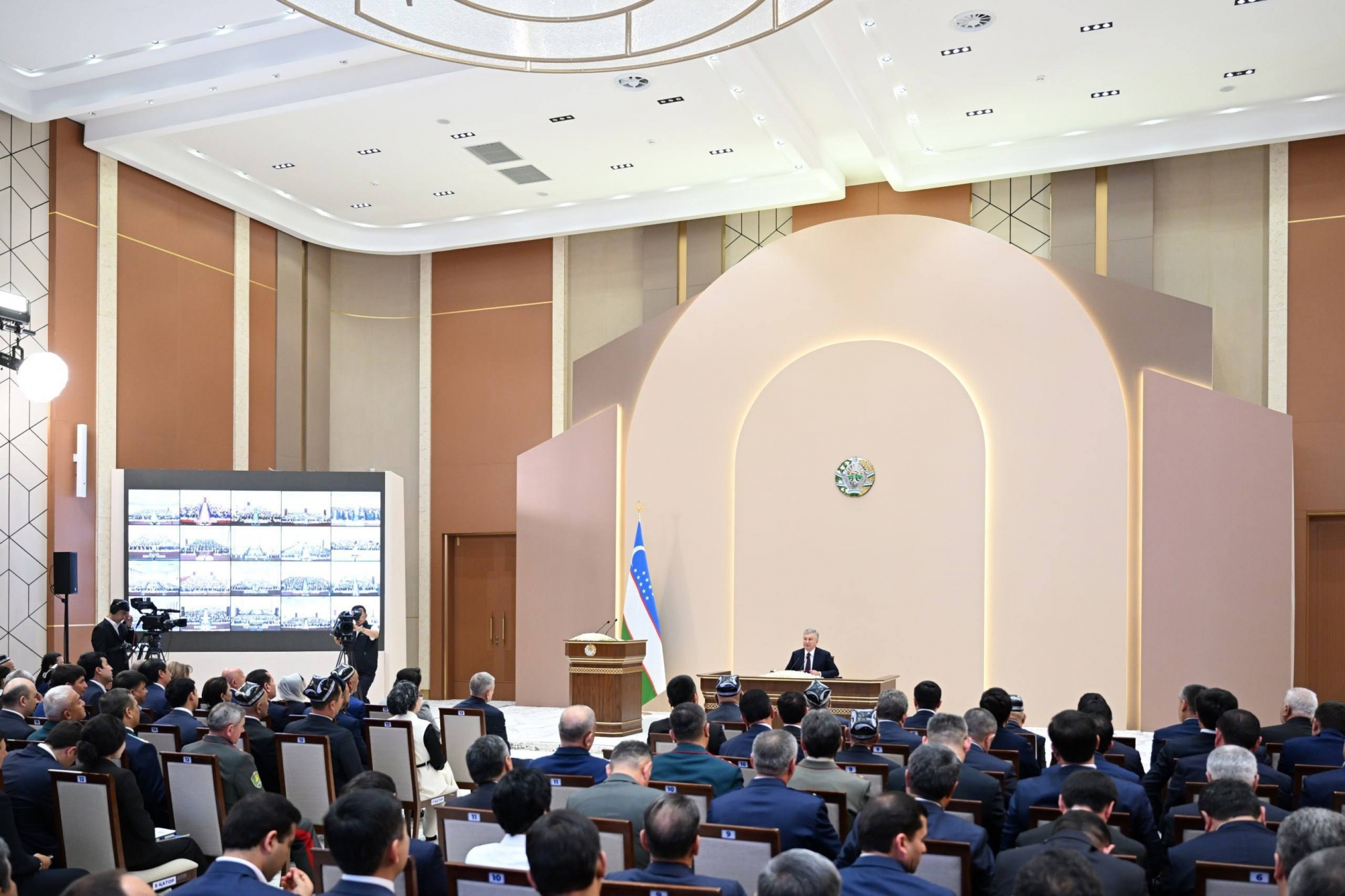
It was emphasized that Fergana Region should become a model for the widespread introduction of modern technologies, digital solutions, and artificial intelligence in government, industry, services, and agriculture.
Fergana has the highest number of young people certified under the “Five Million AI Leaders” program. Regional leaders were instructed to actively involve talented youth in digitizing public services and improving convenience for citizens and businesses. The importance of analyzing the comparative advantages of mahallas using AI and developing job-creating projects was highlighted.
For example, AI analysis of the Yaziyavan district identified logistics as a key focus. About 30,000 vehicles pass daily through a 35-kilometer section of the A-373 highway. The task is to increase economic turnover by 1 trillion soums through logistics hubs, warehouses, and roadside infrastructure.
In recent years, IT services in the region have grown fourfold, with exports exceeding $23 million. From the next academic year, training in programming, robotics, graphic design, and foreign languages will be introduced in 16 districts based on the Kuva model. Branches of IT Park University and Inha University will be opened in Fergana and Margilan, respectively.
Special attention was also given to e-commerce, where the region’s share remains low. Plans include building 100,000 square meters of warehouse infrastructure and training entrepreneurs in 126 mahallas.
Agricultural efficiency was also discussed. The region has 370,000 hectares of irrigated land, but some orchards are outdated or underutilized. Unlocking this potential could produce an additional 300,000 tons of agricultural output and generate 2 trillion soums in added value.
The experience of the “Quva Agrostar” agro-complex was highlighted, including farmer training, seedling supply, and export support. Similar approaches will be implemented across all districts.
A large-scale program will be developed to create super-intensive orchards on 50,000 hectares of low-yield land. Targets include producing 611,000 tons of fruit, 252,000 tons of grapes, 1.8 million tons of vegetables, and increasing exports by 25% to $500 million.
Investment issues were also addressed. Efficient use of 1,077 hectares allocated for industrial zones is required, with each hectare generating at least 50 billion soums annually. Projects worth $5 billion will be launched.
Plans include establishing a free trade zone in Besharik district and building a $70 million trade complex in Kokand.
Tourism opportunities were also emphasized.
“Fergana, with its rich heritage and nature, can increase foreign tourist flow by 2–3 times,” the President noted.
Cities like Kokand and Margilan will focus on pilgrimage tourism, while Sokh and other districts will develop eco and medical tourism. New tourism projects worth $300 million are planned.
Cultural heritage development was also discussed, including creating a digital platform for Kokand’s literary heritage and organizing international reading festivals.
Special attention was given to preserving the traditional art of askiya. A Republican center for askiya and humor has been established in Margilan, with plans to support young talents.
During the meeting, reports from regional leaders and opinions from entrepreneurs and the public were heard.
Share


Objects for investments