


The President of Uzbekistan put forward proposals in five strategic areas of cooperation within the “Central Asia – Republic of Korea” format
President of the Republic of Uzbekistan Shavkat Mirziyoyev participated in the first Central Asia–Republic of Korea Summit in Seoul on September 16, yje press service of the head of our state reports.
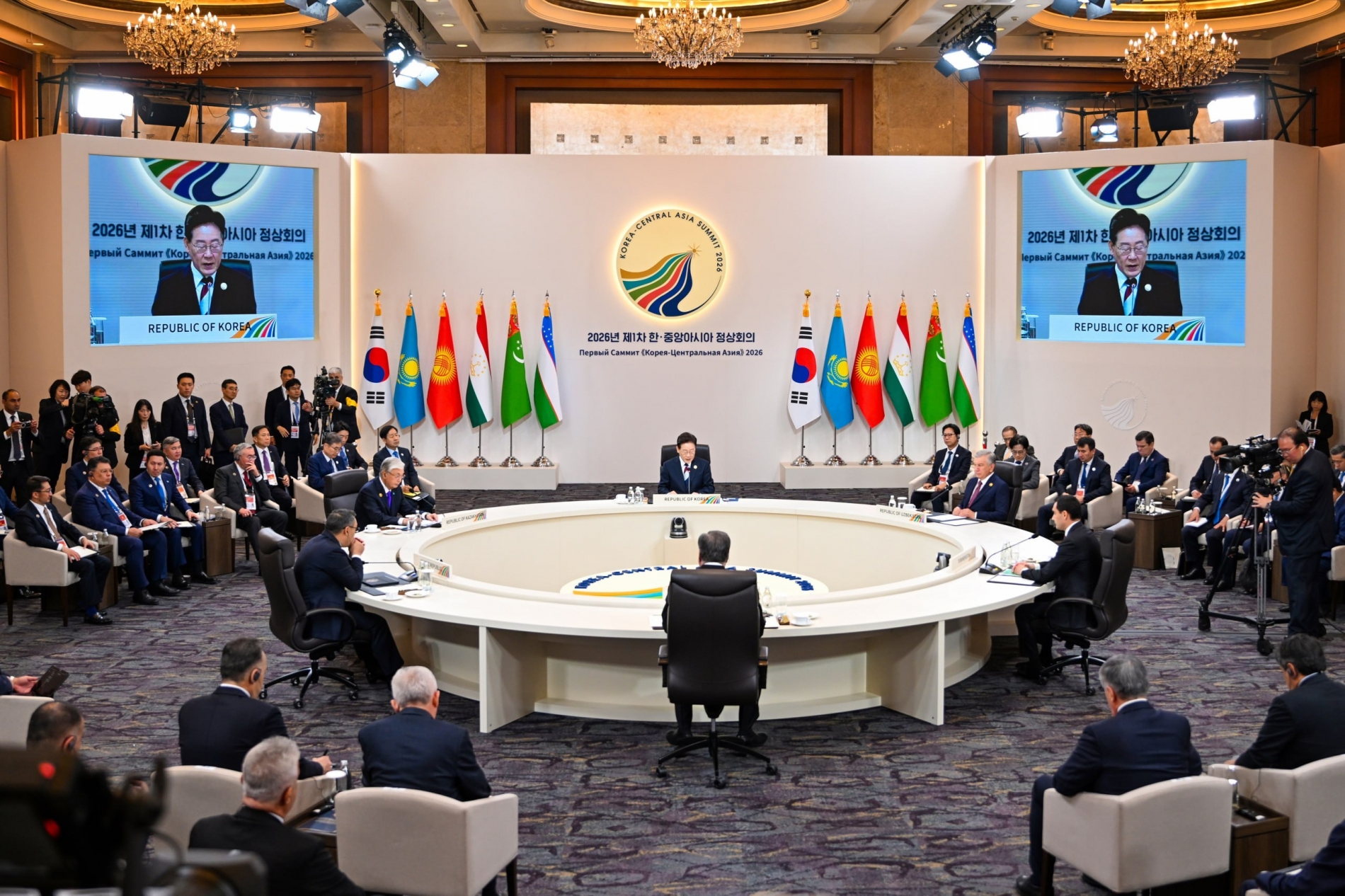
The event was chaired by President of the Republic of Korea Lee Jae Myung and was also attended by President of the Republic of Kazakhstan Kassym-Jomart Tokayev, President of the Kyrgyz Republic Sadyr Japarov, President of the Republic of Tajikistan Emomali Rahmon, and President of Turkmenistan Serdar Berdimuhamedov.
According to the agenda, the participants discussed prospects for expanding mutually beneficial cooperation between the Central Asian states and the Republic of Korea in such priority areas as security, mutually complementary practical cooperation, and the expansion of humanitarian exchanges.
In his speech, the President of Uzbekistan noted that back in 2007, demonstrating strategic foresight, the Republic of Korea was among the first to recognize Central Asia’s enormous potential for close and mutually beneficial partnership in a multilateral format.
“We sincerely value the significant contribution of the Korean side to the industrialization of our countries, modernization of infrastructure, and creation of a solid foundation for sustainable development,” Shavkat Mirziyoyev emphasized.
The roots of these strong ties go back centuries, originating along the caravan routes of the Great Silk Road. The close friendship between our peoples is based on shared values, including deep respect for the older generation, a culture of honest work, and love and devotion to one’s homeland.
“A vivid symbol of the solidarity and mutual affinity of our peoples is the Korean diaspora, which has become an integral part of the multinational family of Central Asia,” the Uzbek leader noted.
The main task today, he emphasized, is not simply to maintain the existing momentum of cooperation, but to turn these achievements into a foundation for qualitative progress.
The combination of the strong potential of Central Asia and the Republic of Korea can open new horizons for building mutually beneficial partnerships.
In this regard, the President of Uzbekistan put forward proposals in five strategic areas of cooperation.
The first area focuses on establishing a long-term planning horizon for the partnership.
“In today’s world, the pace of global change is increasingly outstripping the ability of states to adapt to it. Artificial intelligence is transforming the labor market and entire industries. Climate and water-related risks require solutions designed for decades ahead. New demands are emerging for education, infrastructure, technology, and human capital,” the head of state noted.
In response to these challenges, he proposed developing a long-term conceptual Vision entitled “Central Asia–Republic of Korea: Partnership for Accelerated Development.”
Ensuring the security of the digital future through joint efforts to establish mechanisms for the early detection and prevention of cyber threats was also highlighted as a shared priority.
The second area is aimed at bringing together trade, economic, and investment opportunities within a unified business framework.
“Today, Central Asia is no longer merely a supplier of raw materials. Our countries are actively integrating into global value chains, expanding opportunities for innovation and technological cooperation,” the President emphasized.
The initiative to establish a platform for meetings of ministers of industry and trade was supported. It will enable the parties to jointly find effective solutions for significantly increasing mutual trade and bringing the total trade turnover between the countries of the region and Korea to $20 billion by 2030.
As part of efforts to expand industrial cooperation and investment ties, Uzbekistan expressed its readiness to host the “Central Asia–Korea Industrial and Technology Park,” which will serve as an innovation and manufacturing base for the regional market.
The establishment of direct partnerships through the participation of representatives of regional authorities and businesses from all participating countries in the Third Central Asia–Korea Interregional Forum, to be held in Samarkand next year, was identified as an important driver of economic cooperation.
The third area is intended to open a new chapter in cooperation on critical minerals.
“Given the rapidly growing demand for these valuable resources and the region’s vast reserves, Central Asia has the potential to become one of the world’s leading suppliers,” the Uzbek leader stated.
In this regard, he proposed establishing a Regional Investment Alliance for Critical Minerals aimed at creating powerful processing clusters in the region covering the entire production cycle — from geological exploration and extraction to deep processing of raw materials and the production of high value-added goods.
The fourth area stems from the needs of green development and climate change adaptation.
To bring together complementary capabilities, the President proposed launching a Central Asia–Korea Climate and Carbon Partnership.
The fifth area is joint work to unlock the potential of the younger generation.
Central Asia is a region with strong demographic potential, where young people under the age of 30 account for more than half of the population.
“For us, it is fundamentally important that the younger generation becomes part of a modern technology-driven economy tomorrow, gaining access to advanced knowledge, skills, and international experience,” President Shavkat Mirziyoyev emphasized.
In this regard, he proposed establishing a long-term Partnership for Human Capital Development based on a clear principle: “demand – training – employment.”
The role of young people is particularly important in the joint development and implementation of artificial intelligence. In this context, it was proposed to make President Lee Jae Myung’s “Unmissable Korea” doctrine one of the key pillars of this large-scale process in Central Asia.
In conclusion, it was emphasized that Uzbekistan is ready to host, at the highest level, celebrations next year marking the 35th anniversary of the establishment of diplomatic relations with the Republic of Korea and the 90th anniversary of the Korean diaspora’s presence in the region.
Other leaders also addressed the summit. The Seoul Declaration, as well as a number of other documents on priority areas of cooperation, were adopted following the summit.
Share


Objects for investments