



Measures for the widespread implementation of digital technologies in the mining industry and geology were considered
President Shavkat Mirziyoyev reviewed a presentation on the implementation of digital solutions and artificial intelligence technologies in the mining and geology industries, the press service of the head of our state reports.

The mining industry plays a vital role in our country’s economy. In 2025, enterprises in the industry accounted for 20 percent of total industrial production and generated 118.5 trillion soums in budget revenue.
Therefore, addressing the challenges of technological transformation in the industry, the efficient use of production and labor resources, and the widespread adoption of modern digital solutions is of strategic importance for ensuring economic security, increasing investment, and the rational use of natural resources.
The concepts of “sustainable development” and “digital geology” are actively developing worldwide. Some work in this direction has been done in our country as well. Specifically, in 2025, large mining enterprises saved 7.3 trillion soums in operating expenses, and production costs decreased by 9.1 percent.
The Geomonitoring information system has also been implemented, and data on more than 2,000 deposits has been digitized.
It was noted that work has begun to ensure an increase in gold reserves by 879 tons, silver by 510 tons, and copper by 676,000 tons over the next five years.
Artificial intelligence technologies enable the rapid analysis of geological data, forecasting mineral deposits, accurately assessing reserves, and improving drilling efficiency. To this end, it is planned to implement AI-based solutions at all stages of the geological exploration process.
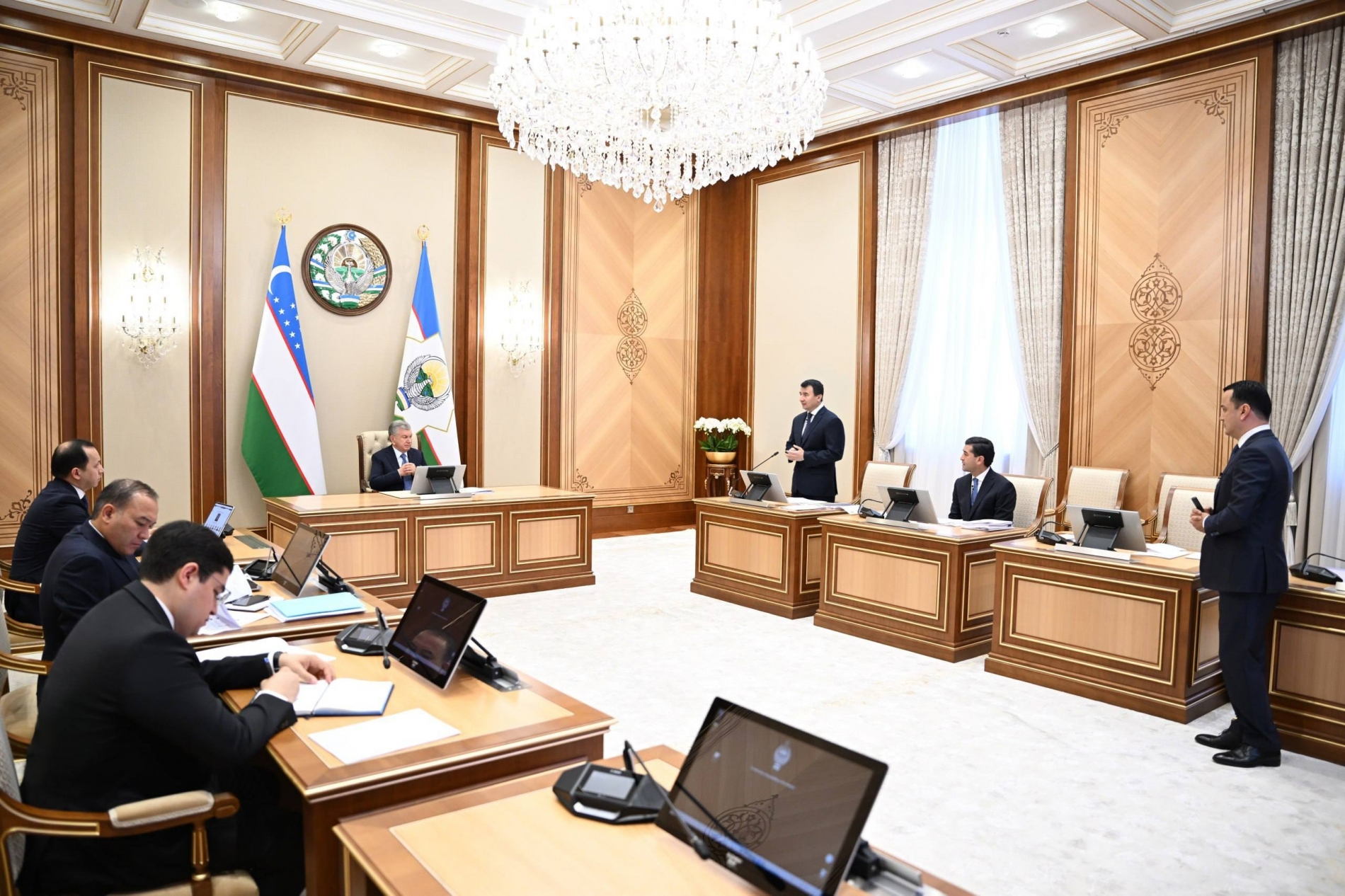
The President of our country emphasized that this requires taking technological transformation in the industry to a new level and creating a system for managing and analyzing production processes based on artificial intelligence.
The mining and geology industries generate large volumes of data, including maps, exploration results, drilling data, laboratory analysis, and production indicators. By consolidating these data into a single electronic database and enabling rapid search and analysis using 3D models, the potential for identifying new deposits can be increased.
This will, it is stated, reduce production costs by 10 percent, cut the time it takes to discover new deposits by half, and quadruple the number of offers available to investors.
The presentation noted that $30 billion in investment is planned for the geology and mining industry by 2030. To achieve this, it is essential to create a high-quality and reliable digital database in line with investor requirements.
In this regard, the creation of a National Geological Database has been proposed. As part of this process, a Technological Transformation Center will be established, and over 36,000 reports and primary data will be digitized. This will double the quality and speed of geological data generation, deposit modeling, and reserve calculations.
Plans were announced for the implementation of 44 projects in 2026-2030 to introduce artificial intelligence and digital technologies in geology and the operations of six large enterprises: the Navoi Mining and Metallurgical Plant, the Almalyk Mining and Metallurgical Plant, Navoiuran, Uzmetkombinat, Uzbekugol, and the Uzbek Technological Metals Plant.
These projects cover five key areas: automation of production processes, digitalization of corporate governance, implementation of artificial intelligence technologies, ensuring occupational and industrial safety, and the digital transformation of geological exploration.
The projects are expected to increase operational efficiency by 7 percent, improve the reliability of machinery and equipment by 20 percent, and increase energy efficiency by 8 percent. A 15 percent reduction in human error and risk is also projected.
It is noted that these solutions will need to be patented.
Responsible officials have been instructed to include measures to improve the efficiency of production and labor resources when developing business plans for mining enterprises, as well as to approve separate programs for projects in the field of technology and artificial intelligence.
Share


Objects for investments