



The current work and future plans in the field of building materials were reviewed
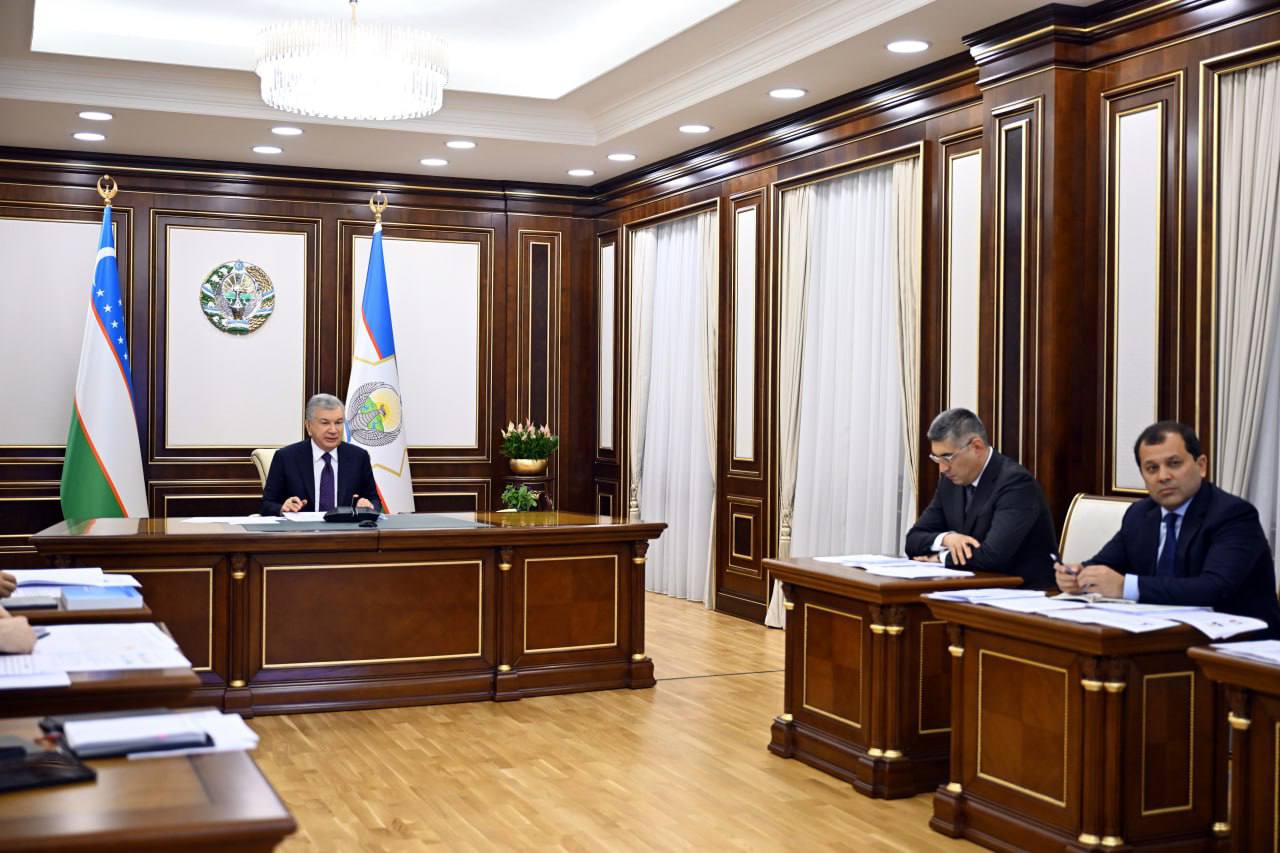
On November 20, President Shavkat Mirziyoyev reviewed a presentation on the development of the construction materials industry, the press service of the head of our state reports.
Over the past eight years, our country’s population has increased by 6 million people. The construction of new homes, roads, and social infrastructure facilities has increased proportionally. During this time, 210 million square meters of residential and non-residential space have been commissioned. Housing with 565,000 apartments has been built, a tenfold increase over previous years.
Great opportunities have also been created for the construction materials industry. Its volume has quadrupled over the past eight years and is expected to reach 53 trillion soums this year, with exports totaling $1.1 billion.
Most importantly, the industry has become a driver of jobs and income in areas of the Surkhandarya, Syrdarya, Khorezm, and Jizzakh regions, which previously had no industry.
At the same time, the industry continues to face challenges related to product quality and compliance with standards, logistics issues, and entering new markets, the presentation noted.
In particular, it was noted that despite the presence of large domestic companies producing PVC pipes, fittings, facing stone, and construction glass, these products were imported in large volumes in 2024.
The presentation outlined key plans for the future.
Specifically, the industry plans to implement 112 projects worth $2.4 billion, creating 13,500 jobs. In addition, five more major strategic projects worth $110 million will be implemented. The goal is to increase the project portfolio to $3.5 billion in the coming years.
The President emphasized that these projects must be developed taking into account the available resources, raw material base, and logistics capabilities of each region and district.
Neighboring countries have a construction materials market worth over $4 billion. Furthermore, there is potential to increase export volumes for nine product categories to 26 countries.
Responsible officials have been instructed to strengthen access to foreign markets and increase production of export-oriented materials, fully utilizing the potential of regions and industries.
The presentation also addressed the efficient use of kaolin reserves. It was noted that despite the country’s kaolin deposits totaling over 1 billion tons, porcelain worth many millions of dollars is imported annually. Therefore, 40 projects for deep kaolin processing, worth a total of $515 million, are planned for next year, and 460 specialized specialists will be trained.
Particular attention was paid to improving energy efficiency in the industry.
Energy audits conducted to date at 34 enterprises have reduced fuel consumption for production.
The goal has been set to systematically continue this work, expand the range of energy-saving products manufactured, and increase the share of energy-efficient and environmentally friendly materials in construction to 25 percent next year and 35 percent by 2030.
The importance of science in improving product quality and safety, as well as the need to more widely utilize the potential of domestic scientists, was emphasized.
Four research projects are being implemented in this area jointly with the Tashkent Chemical-Technological Institute, involving scientists from Germany, Korea, and Turkey. As part of strengthening the integration of science and practice, 30 billion soums will be allocated starting next year to fund research projects in the field of construction materials.
It was emphasized that the widespread implementation of digital management and artificial intelligence technologies in enterprises can reduce production costs by 5-10 percent. To increase the number of enterprises implementing such systems, 100 billion soums are earmarked for allocation over two years.
As our country joins the World Trade Organization, the construction materials industry is also adapting to international requirements. Over the past period, 125 international standards have been adopted, and by 2026, this number is planned to increase to 166.
The President gave specific instructions to responsible officials to implement these plans, expand the production of high-quality products that meet international standards, and enhance export potential.
Share


Objects for investments