



The effectiveness of reforms and priority tasks in the Khorezm region were examined
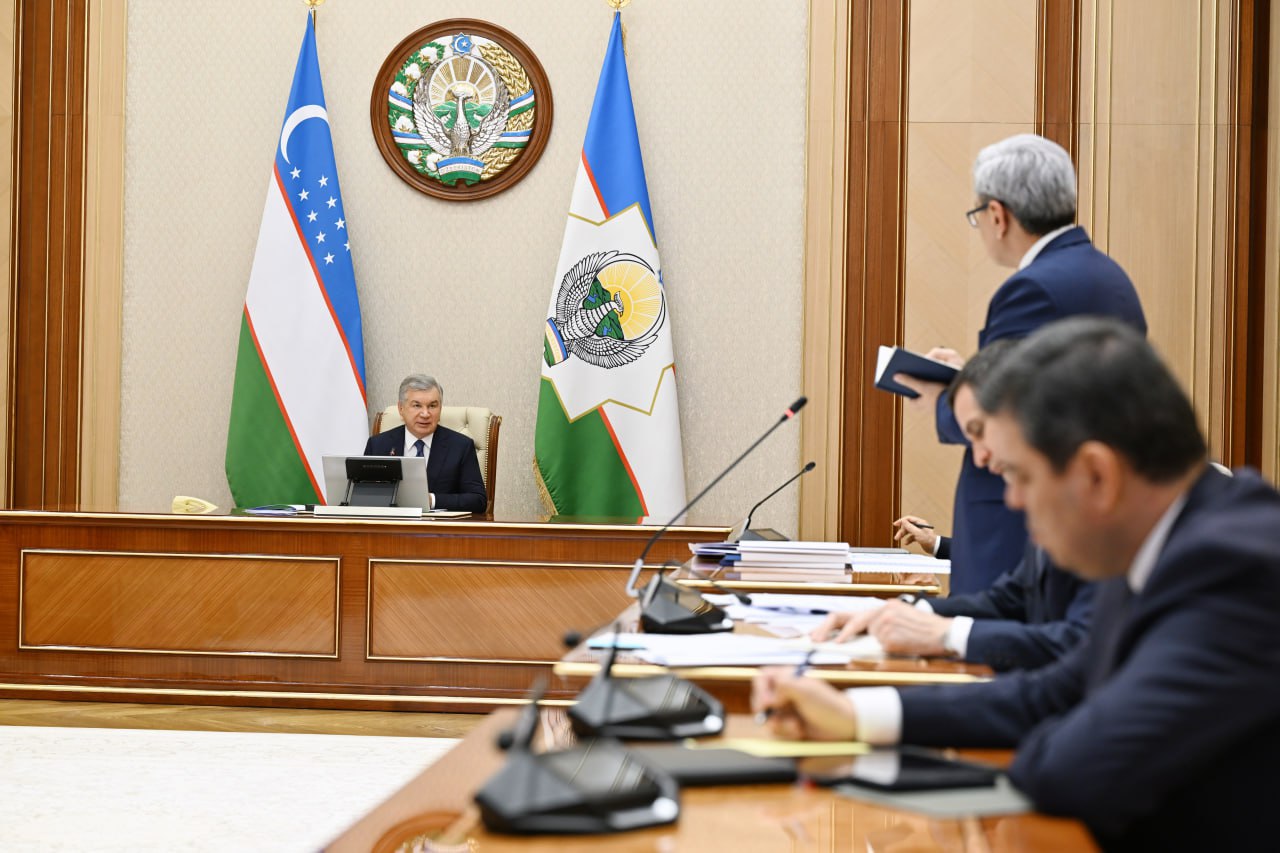
On March 3, President Shavkat Mirziyoyev held a meeting to discuss the effectiveness of reforms underway in the Khorezm region and its future priorities, the press service of the head of our state reports.
As noted, positive results have been achieved in many areas in recent years thanks to the rational use of existing opportunities in the region. Industrial production increased from 2.8 trillion soums in 2016 to 34.3 trillion soums, and the gross regional product amounted to 63 trillion soums. Last year, the region attracted over $1 billion in investment.
However, these achievements do not fully reflect the region’s potential. This is particularly true in the tourism sector – in a region with a unique historical and cultural heritage, the average tourist stay is limited to 1-2 days.
The region is home to over 1 million young people, and 35,000 young men and women enter the labor market annually. It was noted that the regional leadership must pay constant attention to their education and upbringing, their mastery of modern professions, and their employment. The goal is to develop new systemic approaches to raising a younger generation worthy of such great figures as Jaloliddin Manguberdi, Beruni, Khorezmi, and Zamakhshari.
Given that 67 percent of the region’s population lives in rural areas, the importance of reducing unemployment and poverty by creating additional sources of income in rural areas is emphasized.
For example, it is possible to lift at least 10,000 people out of poverty by increasing the number of breeding livestock in 135 mahallas in the Gurlen, Tuprakkala, Yangibar, and Koshkupyr districts; by specializing in the production of building materials, textiles, handicrafts, and furniture in the mahallas of the Urgench, Khanki, Koshkupyr, and Shavat districts; and by creating six industrial and service microcenters in the Urgench, Koshkupyr, Khanki, Yangiaryk, and Shavat districts.
Last year, the number of foreign and domestic tourists visiting the region reached 12.5 million. However, the volume and quality of services provided, the development of new tourist routes, and the enrichment of tourist attractions remain insufficient.
The task was set to create service facilities in the tourist mahallas of Khiva, the Bagat, and Khiva districts, and to develop a master plan for the creation of 14 lively streets in 59 settlements and present it to entrepreneurs.
Instructions were given to develop a comprehensive development program for the Suleymankala Fortress, located on an area of 10.8 hectares, as a new tourist attraction. Furthermore, plans are underway to develop a master plan for the development of tourist and service facilities, as well as entertainment centers, along the Shavat Canal, which flows through the city of Urgench.
At the meeting, increasing investment and exports was identified as a priority. The need to implement large-scale industrial projects that effectively utilize the potential of the Khazorasp, Urgench, Shavat, and Tuprakkala districts and the city of Urgench was emphasized.
The possibility of creating a unified mechanical engineering cluster by increasing the capacity of the automobile plant in Pitnak and increasing local content to 62 percent was noted. Furthermore, new projects are planned in the chemical, textile, and food industries in Hazorasp, and in the furniture and textile sectors in Shavat.
It was reported that $1.6 billion will be allocated for the modernization of the region’s cities and districts and the improvement of road and water infrastructure.
Overall, this year’s target is to increase foreign investment to $2 billion and exports to $510 million. This will increase the gross regional product by 8.4 percent, industrial production by 9 percent, services by 16.2 percent, and agriculture by 5.7 percent.
The decline in poverty in the Khorezm region from 11.9 to 6.7 percent last year was the highest in the republic. However, it was noted that the poverty rate remains above the national average. In this regard, the primary objective has been set to reduce unemployment and poverty to at least 3 percent by the end of the year.
At the same time, instructions have been given to transform Hazorasp, Khanka, Shavat, Yangiaryk, Yangibazar, Tuprakkala, Khiva, and the city of Urgench into areas free of unemployment and poverty.
At the end of the meeting, officials were given a number of specific instructions.
In particular, tasks were set to reconstruct 158 kilometers of canals in the Gurlen district, allocate $81 million for entrepreneurial projects, replace 270 pumping units with energy-efficient equipment, finance the activities of the Uzbek-Turkmen border trade zone, and allocate 100 billion soums for the repair of social facilities and infrastructure.
The President instructed those responsible to organize the work in a way that would bring about concrete changes in the lives of the population and be results-oriented, as well as to ensure a targeted approach in each district and mahalla.
Share


Objects for investments